Learn how ai helps dogs with disabilities at home. Making life easier for dogs with disabilities has totally changed for the better, thanks to AI. Dogs dealing with sight problems, hearing loss, or even mobility issues can now enjoy their home life a lot more comfortably. AI-driven products and smart gadgets are making a real impact on their independence and happiness.
Dawg Solutions Understands
I see firsthand how tough it can be seeing your dog struggle with daily activities. Things like getting to their water bowl or finding their way through the house shouldn’t be a challenge, but for some dogs, it is. It’s exciting to know there are now simple, tech-based solutions that actually make life better for your furry buddy, and a lot easier for you, too.
This guide covers
how you can use artificial intelligence to help your dog with disabilities enjoy a fuller life at home. Whether you’re brand new to these tools or looking for new ideas, I break down the benefits, features, and best products to check out so you can give your dog the support they deserve.
Affiliate Disclosure: Some of the links on this website may be affiliate links. This means that if you click a link and make a purchase, I may earn a small commission at no extra cost to you. These commissions help support 65 Plus Life and Boomer Biz HQ, and Dawg Solutions. so I can continue creating free resources for older adults.
Amazon Disclosure: As an Amazon Associate, I earn from qualifying purchases. Any Amazon links used throughout this website may earn a commission when you purchase through them.
Thank you for supporting my work — it truly means a lot.
Jeff
Step 1: Identify Your Dog’s Unique Needs
Understanding your dog’s challenges is the best place to start.

10 Best Dog Products For Fixed Income Dog Owners
AI can help all kinds of limitations—mobility, vision, hearing, and even anxiety—but it works best when matched to the right situation.
Questions I Ask Before Choosing a Solution:
- Does my dog have trouble moving around the house?
- Is vision loss a concern?
- Does my dog struggle to hear or respond to commands?
- Are there signs of anxiety or confusion in new spaces?
Figuring out what your dog finds tough day to day helps you pick the best AI tools and adapt your home for their needs.
Step 2: Explore Smart Home Products That Use AI
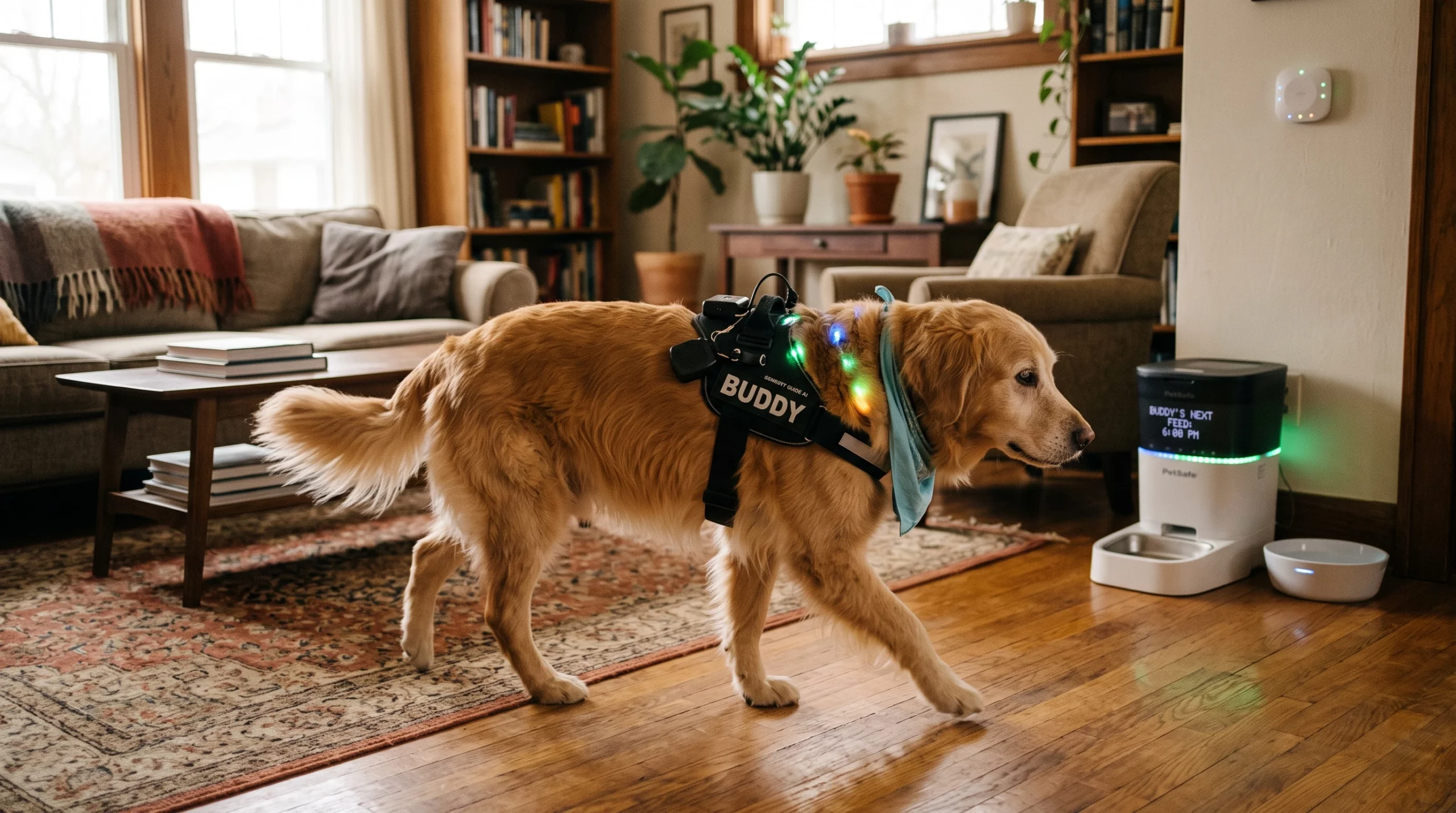
AI-powered pet gadgets keep getting better. There are lots of options now, whether your dog is blind, deaf, or needs help getting around. Below are some eye-catching products and examples I find especially useful for supporting dogs with disabilities at home.
Popular AI Tools Helping Disabled Dogs:
- AIPowered Pet Cameras: These track your dog’s movement, send alerts if there’s a fall, and even help you communicate remotely.
- Smart Feeders: AI feeders can schedule meals, autodispense food, and track eating habits, so you know your dog is getting what they need.
- Voice and Sound Recognition Devices: can vibrate or beep to get your deaf dog’s attention around the home.
- Obstacle Detection Harnesses: For blind dogs, smart harnesses use cameras and sensors to gently direct your pup around household objects.
- AIMobility Monitors: These devices monitor your dog’s bones and joints, giving you real-time data and advice about how much movement is safe.
In recent years, tech companies have also introduced smart beds that adjust and provide comfort for dogs with joint pain, or environmental sensors that send real-time conditions to your phone to prevent overheating. With these gadgets, it’s easier to spot issues early and provide timely help. From food dispensers that sync with your dog’s routine to remote treat launchers that allow you to interact while you’re away, the options to give a boost to your pet’s daily life are growing all the time.
Step 3: Adapt Your Home with Smart Technology
AI tools make your space safer and more comfortable. You don’t need a smart home system to begin; start with one or two gadgets, and build up if you find they help.
Simple AI Upgrades for Your Home:
- Smart Pet Doors: These use AI facial recognition to automatically let your dog in or out. Great for independent dogs that struggle to ask for help.
- Smart speakers (like Amazon Echo or Google Nest) can be trained to recognize special commands, which is super helpful for dogs with hearing or vision loss when paired with routines (like turning on a light or sounding a chime).
- Environment Monitor Devices: AI sensors monitor room temperature, air quality, or pet activity, and can alert you if your dog’s routine seems off.
I set up a motion sensitive light that turns on when she gets up at night. It’s a simple upgrade, but it prevents her from bumping into things and gives her more confidence to move around.
Another simple solution is using smart mats near entryways that alert you if your dog is pacing or struggling, so you can intervene sooner. These affordable and easy-to-use devices provide extra peace of mind for pet owners who want to keep their dogs safe even when they can’t be nearby every second.
Step 4: Train and Introduce AI Devices to Your Dog
Why Is Socialization Important For Special Needs Dogs
Tech is great, but success depends on gentle training and patience. Some dogs may be unsure about new gadgets at first. It helps to introduce one change at a time and reward them for positive behavior.
Tips For a Smooth Transition:
- Let your dog sniff and explore new devices before turning them on.
- Use treats or playtime to reinforce positive associations with AI products.
- Start in a quiet room, so your dog isn’t overwhelmed.
- Show patience if your dog needs time to adjust. Every pup has their own pace.
Work closely with your vet or a trained animal behaviorist if you run into trouble. Training is much smoother when you make the process comfortable and stressfree for your dog. Remember, the goal is always to add to your dog’s quality of life, not introduce new worries.
Step 5: Monitor Progress and Adjust for Comfort
AI tech gives you regular feedback through apps or dashboards, so you can track how your dog is doing. If you notice any discomfort or anxiety, switch things up. Dogs can’t tell us how they feel about gadgets, so extra attention and flexibility matter a lot.
What I Watch For:
- Signs of frustration, like barking, pacing, or ignoring devices.
- Changes in activity level or eating/drinking patterns.
- Increased willingness to explore more of the home, or seeming more relaxed.
If your dog shows signs of discomfort, take a break and adjust the devices as needed. Stay alert to subtle shifts in your dog’s daily habits; sometimes minor tweaks can make the experience more pleasant for them. Don’t hesitate to reach out to support teams or online pet tech communities if you need new tips or ideas about adjusting your setup. Your active involvement is key for these devices to be as beneficial as possible.
Answers to Common Questions About AI and Disabled Dogs
How much tech is too much?
Start small and see what your dog accepts. Most dogs do best with one or two devices focused on their main challenges. Too many gadgets at once can be overwhelming.
Are AI products safe for dogs with medical conditions?
Most are, but always check with your vet if you’re unsure. Look for products with adjustable sensitivity and noninvasive features. Reading product reviews from other pet owners also helps make smart choices.
My dog has anxiety—is AI helpful?
Some AI gadgets are designed to help with anxiety! Interactive toys and cameras that let you check in or speak to your dog remotely are super helpful. For highly anxious dogs, start slow, and keep routines consistent so new devices become a normal part of their world.
What Are The Best Smart Dog Products For Senior Dogs
AI toys that can move or respond to your dog’s presence provide mental stimulation, which is particularly helpful for dogs who may feel isolated. Consider pairing these with calming music played through a smart speaker or app when you leave home—these combinations often help ease anxiety over time.
Building a Happier Home for Disabled Dogs
AI isn’t just for tech pros. With a handful of easy changes, you can make a big difference for your disabled dog and their quality of life. If you’re not sure where to start, focus on the challenges that cause daily frustration or hold your dog back from enjoying their space.
Here’s what you can do this week:
- Pick one area of challenge—mobility, hearing, or sight—and look for an AI gadget to support that need.
- Start slow, make adjustments for comfort, and give lots of positive reinforcement.
- Stay tuned to how your dog responds, and ask your vet for recommendations if you need extra support.
Your extra effort goes a long way in making sure your dog feels safe and confident at home. Have you tried any smart gadgets for your dog? Feel free to share what worked (or didn’t) below—I’d love to hear your stories and tips!
Thank you for visiting Dawg Solution to learn how ai helps dogs with disabilities at home,
Jeff
Affiliate Disclosure: Some of the links on this website may be affiliate links. This means that if you click a link and make a purchase, I may earn a small commission at no extra cost to you. These commissions help support 65 Plus Life and Boomer Biz HQ, and Dawg Solutions. so I can continue creating free resources for older adults.
Amazon Disclosure: As an Amazon Associate, I earn from qualifying purchases. Any Amazon links used throughout this website may earn a commission when you purchase through them.
Thank you for supporting my work — it truly means a lot.
Jeff
Tractive GPS Tracker Review
I really liked your tip about setting up a motion-sensitive light for dogs who get up at night, since it’s such a simple way to prevent bumps and build their confidence.
When my older dog started losing his vision, I tried rearranging furniture to make clear paths, but I quickly realized he still got confused in the dark and would just freeze up instead of moving.
How do you usually introduce something like a sudden light or a new smart device without startling a dog who’s already sensitive to changes in their environment? I’d love to hear if you have a slow rollout method that helps them connect the new gadget with comfort instead of stress.
Hello Ropata
I thank you for reading and commenting, with my own dog I had to slowly and gradually introduce him to new technology products. I would only work with him a short period each day until he become less anxious, it will take patience on your part.
Jeff