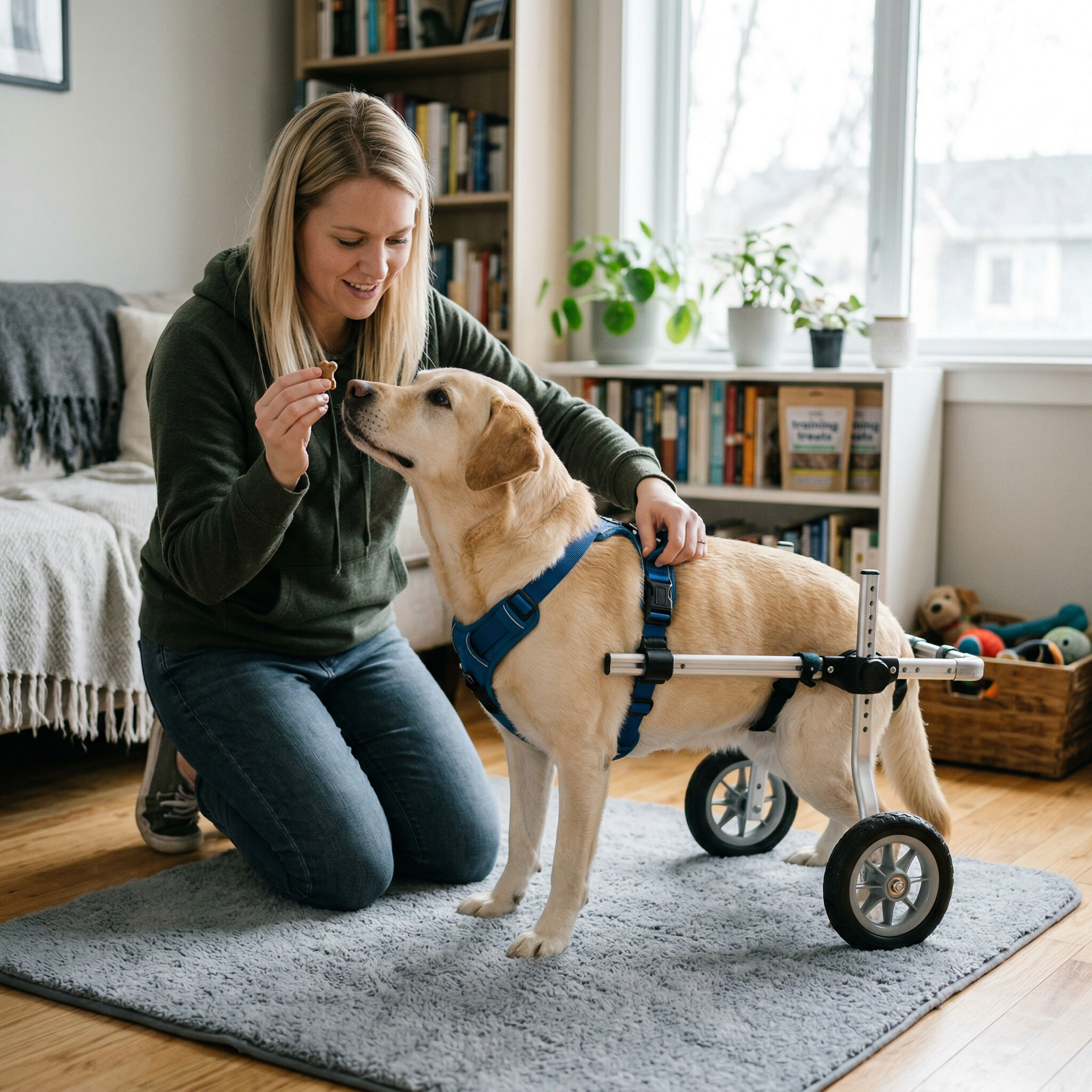
How to train your dog to use mobilty aids will ease your new experience, this is a good step-by-step guide for dog owners and dogs as well. Many dogs will be anxious about using mobility aids at the beginning, so easing them into this is our strategy.
Affiliate Disclosure
Amazon + Friends
Affiliate Disclosure: Some of the links on this website may be affiliate links. This means that if you click a link and make a purchase, I may earn a small commission at no extra cost to you. These commissions help support 65 Plus Life and Boomer Biz HQ, and Dawg Solutions. so I can continue creating free resources for older adults.
Amazon Disclosure: As an Amazon Associate, I earn from qualifying purchases. Any Amazon links used throughout this website may earn a commission when you purchase through them.
Thank you for supporting my work — it truly means a lot.
Jeff
When Helping Hurts at First

My Experience with Aussie
When I first realized my dog Aussie needed mobility support, I’ll be honest—I wasn’t prepared for how emotional it would be.
At first, I thought getting him a mobility aid would make things easier for both of us. Less slipping, more confidence, better walks. Simple, right?
Not even close.
The first time I introduced it, Aussie froze.
He looked confused… then uncomfortable… then flat-out stressed.
And if I’m being real, I wasn’t doing much better.
I was anxious too—wondering if I was doing the right thing, if I was making things worse, if he felt scared or restricted. Every time he hesitated or resisted, I felt it in my gut.
Instead of helping him, it felt like I was forcing something on him that he didn’t understand.
That moment hits a lot of dog owners harder than they expect.
Because when your dog is struggling physically, all you want to do is help—but when your “help” stresses them out, it creates this loop of frustration and worry on both sides.
Aussie would stiffen up. I’d get tense. He’d pick up on that tension immediately.
And just like that, something meant to improve his life became something we both dreaded.
But here’s what I learned:
That reaction isn’t failure.
It’s normal.
Dogs don’t automatically understand mobility aids. To them, it’s just a strange object interfering with how they move—and that uncertainty can feel scary.
What changed everything for us wasn’t the equipment…
It was how I introduced it.
Why Mobility Aids Made Aussie and Me Anxious
Looking back, it’s easy to understand why introducing mobility aids made both Aussie and me so anxious—but in the moment, it just felt overwhelming.
For Aussie, the anxiety came from confusion.
Dogs rely on familiarity and routine. Suddenly putting something new on his body—whether it was a harness, sling, or support device—completely changed how he moved.
Imagine waking up one day and being asked to walk with something strapped to you that you don’t understand.
That’s how it felt to him.
He didn’t know:
- Why it was there
- Whether it was safe
- Or how to move naturally with it
So his reaction made perfect sense—he froze, resisted, and tried to avoid it.
And then there was me.
My anxiety came from wanting to help—but not knowing if I was doing it right.
Every time Aussie hesitated, I questioned myself:
- Am I pushing him too hard?
- Is this making things worse?
- What if he gets hurt or scared?
That uncertainty crept into everything I did.
And here’s the part most people don’t realize:
Dogs are incredibly tuned in to our emotions.
Aussie could feel my hesitation and stress. The more unsure I became, the more unsure he became.
It created a feedback loop:
- He resisted → I got anxious
- I got anxious → he got more stressed
- And around we went
What was supposed to be a helpful tool started to feel like a negative experience for both of us.
But here’s the key takeaway I wish I knew earlier:
The anxiety wasn’t caused by the mobility aid itself… it was caused by how new and unfamiliar the experience was—for both of us.
Once I understood that, everything shifted.
Instead of trying to make Aussie accept it…
I focused on helping him feel safe with it.
How to Train Your Dog to Use Mobility Aids
Comfort & Mobility
A Step-by-Step Guide for Dog Owners
Introducing a mobility aid to your dog can feel intimidating at first, especially if your dog seems nervous or resistant. The good news is that most dogs can learn to accept mobility support when they’re given time, patience, and plenty of encouragement.
The biggest mistake many dog owners make is moving too fast.
If there’s one thing I learned with Aussie, it’s this: slow and gentle wins every time.
Step 1: Let Your Dog See and Smell the Mobility Aid
Before you ever try to put the mobility aid on your dog, let them check it out first.
Place it on the floor and allow your dog to sniff it, look at it, and approach it at their own pace. Don’t force interaction. This first step is all about making the equipment feel less strange and less threatening.
You can encourage curiosity by praising your dog in a calm voice and offering a treat when they show interest.
The goal here is simple: help your dog see the mobility aid as just another object in their environment, not something scary.
Step 2: Create a Positive Association
Once your dog is comfortable being near the mobility aid, start pairing it with good things.
Every time the aid comes out, offer treats, praise, petting, or anything else your dog enjoys. You want your dog to start thinking, “When this shows up, something good happens.”
This step matters more than many owners realize.
If the mobility aid only appears during stressful moments, your dog may quickly learn to dread it. But if it becomes linked to rewards and reassurance, acceptance comes much easier.
Step 3: Introduce the Aid Without Putting It On Fully
The next step is to let your dog feel the mobility aid lightly without committing to wearing it.
For example, you might gently drape part of the harness over their back for a second, then remove it. Or lightly touch the sling to their body and reward them right away.
Keep these early introductions short and calm.
You’re not trying to get it on perfectly yet. You’re simply teaching your dog that brief contact with the aid is safe.
Step 4: Put the Mobility Aid On for a Very Short Time
Once your dog seems calmer with the feel of the aid, try putting it on properly—but only for a few seconds at first.
This is where a lot of owners rush, and that can backfire.
Put the aid on gently, praise your dog, offer a treat, and remove it before they become too stressed. Ending early helps build confidence.
It’s better to have five short positive sessions than one long stressful one.
Step 5: Encourage Small, Easy Movements
After your dog can tolerate wearing the mobility aid briefly, encourage just a little movement.
Start with one or two steps. That’s enough.
Use a cheerful voice, offer a treat, and keep the experience light. Don’t expect a full walk right away. Your dog is learning how their body feels with this new support, and that takes time.
With Aussie, even a few hesitant steps were worth celebrating in the beginning.
Step 6: Practice in a Calm, Familiar Space
Always begin training in a place where your dog already feels safe, like your living room, hallway, or backyard.
Avoid busy places, distractions, slippery floors, or unfamiliar environments early on. A calm setting helps your dog focus on learning instead of worrying about everything around them.
The less overwhelming the environment, the easier it is for your dog to adjust.
Step 7: Keep Sessions Short and Positive
Short sessions are one of the best ways to reduce stress.
A few minutes at a time is plenty, especially in the beginning. Stop before your dog becomes frustrated, tired, or overwhelmed.
You want each session to end on a good note, even if progress feels small.
Tiny wins add up.
Step 8: Watch Your Dog’s Body Language
Your dog will tell you a lot through their body language.
If your dog freezes, pants heavily, tries to back away, refuses treats, or looks unusually tense, they may be feeling overwhelmed. That’s a sign to slow down and make the next session easier.
Training with mobility aids should build confidence, not pressure.
Paying attention to your dog’s comfort level can make all the difference.
Step 9: Gradually Increase Time and Use
As your dog becomes more comfortable, slowly increase how long they wear the mobility aid and how much they move in it.
This should happen gradually over days or even weeks, depending on your dog’s condition, personality, and confidence.
Some dogs adjust quickly. Others need more time.
That’s normal.
Progress doesn’t have to be fast to be successful.
Step 10: Stay Calm, Patient, and Encouraging
Your dog takes emotional cues from you.
If you feel rushed, frustrated, or nervous, your dog may pick up on that energy. Try to stay calm and reassuring, even if the process is slower than you hoped.
That was a big lesson for me with Aussie.
The more relaxed and patient I became, the easier it was for him to trust the process.
Sometimes the real training isn’t just for the dog—it’s for us too.
For Dog Owners
Relaxed & Secure
Training your dog to use mobility aids is not about forcing them to accept something uncomfortable.
It’s about helping them feel safe, supported, and confident in a new experience.
Take it one small step at a time.
That’s how trust is built.
And for dogs like Aussie, that trust can make all the difference.
Common Mistakes Dog Owners Make And How to Fix Them
When I first started working with Aussie and his mobility aid, I made a few of these mistakes myself—without even realizing it.
The problem is, most of them come from a good place.
We want to help our dogs feel better as quickly as possible.
But rushing or approaching things the wrong way can actually slow progress and increase stress—for both you and your dog.
Here are the most common mistakes dog owners make—and how to fix them.
Mistake #1: Moving Too Fast
One of the biggest mistakes is trying to get your dog fully comfortable with a mobility aid too quickly.
Putting it on and expecting them to walk normally right away can overwhelm them.
How to fix it:
Slow everything down.
Break the process into small steps—sniffing, brief contact, short wear time, then gradual movement. Let your dog adjust at their own pace, even if it takes days or weeks.
Mistake #2: Forcing the Mobility Aid On
It’s tempting to “just get it on” and hope your dog adjusts.
But forcing it can create fear and resistance.
Your dog may start to associate the mobility aid with stress or loss of control.
How to fix it:
Make it your dog’s choice whenever possible.
Use treats, praise, and gentle encouragement. Let them come to the aid instead of pushing it onto them. Build trust first—progress will follow.
Mistake #3: Only Using the Aid During Stressful Moments
If the only time the mobility aid appears is when your dog is already struggling, tired, or in discomfort, they may start to associate it with negative experiences.
How to fix it:
Introduce the aid during calm, relaxed times.
Pair it with positive moments—treats, attention, or even just quiet bonding time—so it doesn’t feel like a signal that something is wrong.
Mistake #4: Ignoring Your Dog’s Body Language
Understanding Aging Dogs
Dogs communicate clearly—but not with words.
If your dog freezes, avoids the aid, pants excessively, or refuses treats, they’re telling you they’re uncomfortable.
Ignoring these signs can make things worse.
How to fix it:
Pay attention and adjust.
If your dog seems stressed, go back a step. Make the next session easier. Progress should feel manageable, not overwhelming.
Mistake #5: Letting Your Own Anxiety Take Over
This was a big one for me with Aussie.
When I felt unsure or worried, he picked up on it immediately—and it made him more hesitant.
Dogs are incredibly tuned in to our emotions.
How to fix it:
Stay calm and steady.
Even if you’re unsure, try to project confidence and reassurance. A relaxed tone and gentle handling can go a long way in helping your dog feel safe.
Mistake #6: Making Training Sessions Too Long
Long sessions can lead to frustration, fatigue, and resistance—especially for older dogs or those already dealing with mobility issues.
How to fix it:
Keep sessions short and positive.
A few minutes at a time is enough. End on a small success so your dog builds confidence instead of stress.
Mistake #7: Expecting Immediate Results
It’s natural to want quick improvement—but adjusting to a mobility aid takes time.
Some dogs adapt quickly. Others need patience and repetition.
How to fix it:
Focus on progress, not perfection.
Celebrate small wins—one step, a calm reaction, or even just allowing the aid to be placed on them. Those moments matter.
Something To Think About
If you’re making any of these mistakes, you’re not doing anything wrong—you’re just learning.
I’ve been there with Aussie.
The key is recognizing what’s not working and making small adjustments.
With patience, consistency, and a calm approach, most dogs can learn to accept mobility aids—and even benefit from them.
And once that happens, you’ll both feel the difference.
How Mobility Aids Improved Aussie’s Comfort Zone
Once Aussie started getting used to his mobility aid, something really important began to change.
Not all at once—but little by little.
At first, it was just small things.He wasn’t slipping as much on the floor.
He seemed a little less hesitant to stand up.
He didn’t look as tense when moving around the house.
Those small wins added up fast.
Before long, I noticed something I hadn’t seen in a while—confidence.
Instead of pausing and second-guessing every step, Aussie started moving more naturally again. He wasn’t fighting his body as much.
And that changed everything.
More Stability, Less Stress
One of the biggest differences was how much more stable he felt.
Without the constant fear of slipping or falling, Aussie could relax. And when a dog feels physically secure, their stress level drops almost immediately.
That alone made a huge impact on his comfort zone.
He wasn’t just getting around—he was doing it with less anxiety.
A Return to Familiar Routines
As his confidence grew, Aussie started getting back to things he had slowly stopped doing.
Simple routines—like walking across the room, going outside, or repositioning himself—became easier again.
And those everyday moments matter more than we sometimes realize.
Dogs thrive on routine. When mobility issues take that away, it can affect them emotionally as much as physically.
The mobility aid helped give some of that normalcy back.
Less Struggle, More Freedom
Before the mobility aid, even small movements could feel like a challenge for Aussie.
After adjusting to it, those same movements became smoother and less frustrating.
He didn’t have to work as hard just to get from one place to another.
That meant less strain on his body—and less frustration overall.
And when frustration goes down, quality of life goes up.
Our Bond Got Stronger
This was something I didn’t expect.
Going through the process together—figuring it out step by step—actually strengthened the trust between us.
Aussie learned that I wasn’t trying to force something on him—I was trying to help him.
And once he felt that, everything became easier.
There’s something powerful about helping your dog through a challenge like this. It builds a deeper level of understanding and connection.
Jeff Shares
Mobility aids didn’t just help Aussie move better.
They helped him feel better.
They gave him more confidence, more stability, and a greater sense of comfort in his own body.
And for me, they replaced that early anxiety with something much better—peace of mind.
If you’re just starting this journey with your own dog, know this:
It may feel stressful in the beginning.
But with patience and the right approach, things can improve in ways you might not expect.
Just take it one step at a time.
That’s exactly how Aussie and I got there.
My Helpful Resource for You and Your Dog Bonus
If there’s one thing I hope you take away from Aussie’s journey, it’s this:
You’re not alone in this.
Helping a senior dog adjust to mobility aids can feel overwhelming at first. It’s emotional, it’s uncertain, and sometimes it feels like you’re not getting it right.
I’ve been there.
But with patience, small steps, and a calm approach, things do get better.
Your dog can regain confidence.
They can feel safer moving around.
And you can both find a new rhythm that works.
Sometimes, all it takes is a little guidance to make that process easier.
That’s why I recommend checking out The Senior Dog Survival & Support Handbook on Amazon Kindle Unlimited.
It’s a helpful resource packed with practical advice for caring for aging dogs—especially when it comes to mobility, comfort, and improving their quality of life.
And if you’re already using Kindle Unlimited, you may be able to read it at no extra cost.
Think of it as a companion guide to everything we’ve talked about here—something you can refer back to whenever you need a little extra support.
Aussie & Jeff Shares
You don’t have to figure everything out all at once.
Take it one step at a time. Stay patient. Stay encouraging.
Your dog is counting on you—but they’re also learning right alongside you.
Just like Aussie did.
Thank you for visiting Dawg Solutions,
Aussie & Jeff
Amazon Disclosure: As an Amazon Associate, I earn from qualifying purchases. Any Amazon links used throughout this website may earn a commission when you purchase through them.
- Top Nutritional Needs Of Picky Small Dog BreedsTop nutritional needs of picky small dog breeds was inspired by my mothers yorkie terrier, she thinks she is too good to eat dog food. No matter if its kibbles or canned, she will go hungry before giving in. My mother worries that she is not getting the nutritional needs that she needs, so that … Read more
- Why Is Socialization Important For Special Needs DogsWhy is socialization important for special needs dogs might surprise you. Are you a dog owners with a dog with special needs, maybe you have it in your heart to adopt a special needs dog. Socialization is an important part of caring for this special dog, read why in my article written especially for you. … Read more
- What Is The Best Diet For Special Needs DogsWhat is the best diet for special needs dogs. Did you ever wonder if your special needs dog should be on a special diet plan. That is what we are going to cover in this article, so if this is something that interests you this article is for you. Affiliate Disclosure Amazon + Friends Affiliate … Read more
- How To Train Special Needs Dogs EffectivelyHow to train special needs dogs effectively is to help dog owners. Special needs dogs of course need special products from time to time, and then training them how to use them can be a challenge. Affiliate Disclosure Amazon + Friends Affiliate Disclosure: Some of the links on this website may be affiliate links. This … Read more
- What Are The Best Smart Dog Products For Senior DogsWhat are the best smart dog products for senior dogs. Taking care of our older dogs is extremely important to dog owners, we want to make them as comfortable and happy as possible. Smart dog products are able to help us accomplish these goals, together we are going to learn about the better smart dog … Read more
- How To Choose Smart Dog Products Without OverspendingHow to choos smart dog products without overspending your budget. As you might have experienced on your own overspending is not difficult to do today, and we want our dogs to have whatever we can afford that will make their lives more comfortable. Affiliate Disclosure Amazon + Friends Affiliate Disclosure: Some of the links on … Read more
- Popular Toy Dog Breeds For CompanionshipPopular toy dog breeds for companionship especially for older adults. Living alone for seniors can make life extremely lonely, but many seniors have found campionship from adding a toy dog breed into their home. Affiliate Disclosure Amazon + Friends Affiliate Disclosure: Some of the links on this website may be affiliate links. This means that … Read more
- 10 Best Dog Car Seats Shopping Guide10 best dog car seats shopping guide is to help dog owners. Dog car seats might be new to many of you reading this, so I am going to do my best to help you narrow down your best choices to get the most for your hard earned money. Affiliate Disclosure Amazon + Friends Affiliate … Read more
- How To Choose Dog Supplements For Arthritis With ConfidenceHow to choose dog supplements for arthritis with confidence can overwhelm some dog owners, so I am going to guide you step-by-step how to choose the best dog supplements for arthritis. Like people, many older dogs develop arthritis just like we do, so this can be a good addtion to their diet plan. Affiliate Disclosure … Read more
- Halo Collar Review: Is It Worth It For Your Dog’sHalo Collar is an investment for dog owners that you might like to know about, how many of you have a dog who likes to explore every chance that they get. This will provide you with peace of mind the next time they go on an adventure without you, ask yourself is keeping my dog … Read more
This is such a thoughtful and practical guide for helping dogs adjust to mobility aids! I really appreciate how you break the process into clear, manageable steps, emphasizing patience and positive reinforcement. Many dog owners don’t realize how anxious a dog can feel when first introduced to new equipment, and your explanation about easing them in gradually really resonated. I love that you highlight watching body language, celebrating small wins, and keeping sessions short, these tips make a huge difference in building trust and confidence. The personal story with Aussie adds authenticity and shows that even setbacks are normal. Overall, this article empowers owners to support their dogs compassionately, creating a safer and more comfortable experience. It’s a reminder that with calm guidance, love, and consistency, mobility aids can truly improve a senior dog’s quality of life.
Thank you Andrejs
Its always a pleasure to hear from my readers from Dawg Solutions. Aussie has taught me a lot about working with an anxious dog over the years. Now he is teaching me about introducing him to new mobility products as time goes by.
Jeff