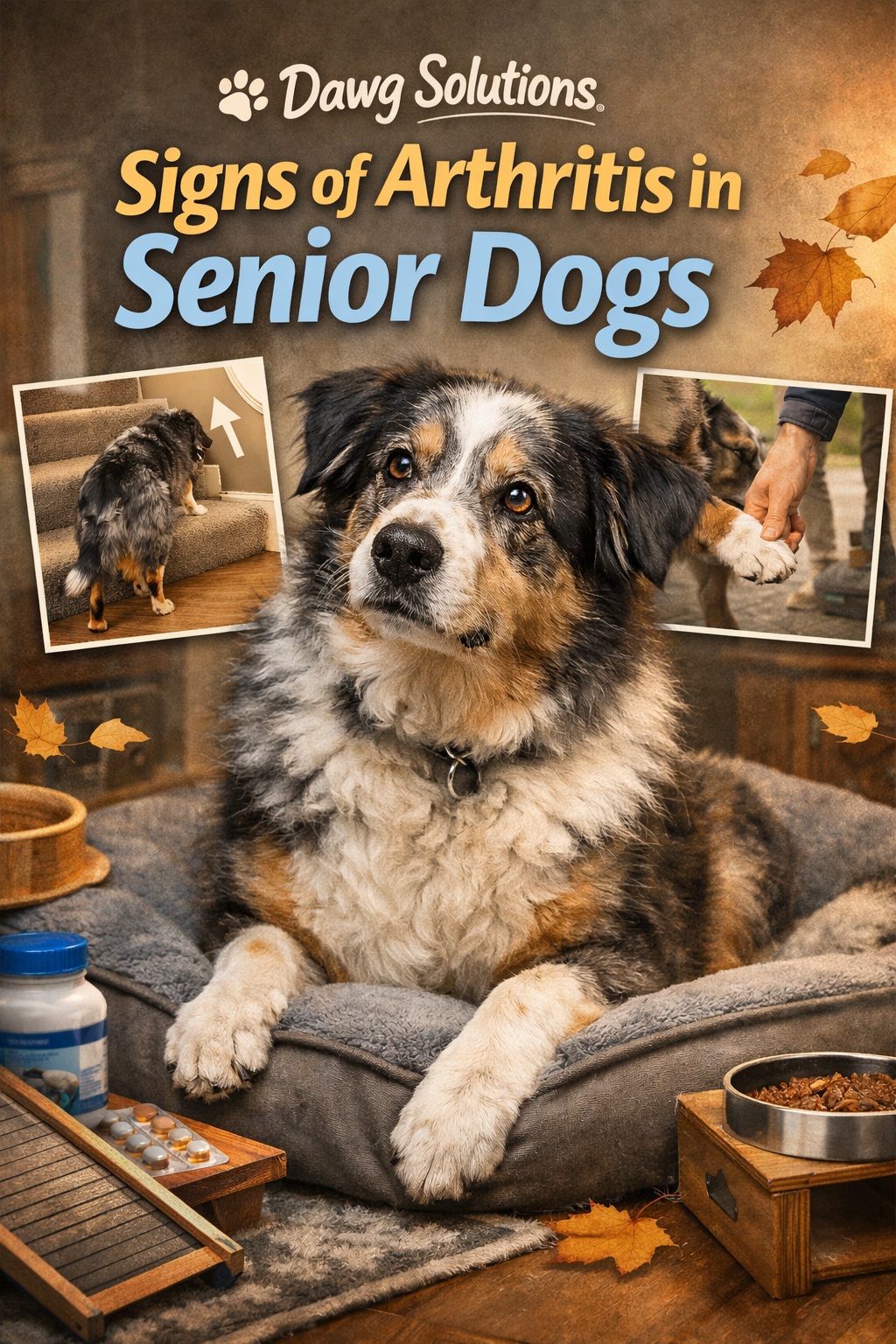
Signs of arthritis in senior dogs are important for dog owners to know, when we start making healthy changes early our older dogs will live a healthier and happier life. Aussie is beginning to show early signs of arthritis, here is what I found out about helping him from my vet and research.
Affiliate Disclosure
Amazon + Friends
Affiliate Disclosure: Some of the links on this website may be affiliate links. This means that if you click a link and make a purchase, I may earn a small commission at no extra cost to you. These commissions help support 65 Plus Life and Boomer Biz HQ, and Dawg Solutions. so I can continue creating free resources for older adults.
Amazon Disclosure: As an Amazon Associate, I earn from qualifying purchases. Any Amazon links used throughout this website may earn a commission when you purchase through them.
Thank you for supporting my work — it truly means a lot.
Jeff
Signs of Arthritis in Senior Dogs
If you share your life with an older dog, you know how quietly the years can sneak up on them. I started noticing that with my own dog, Aussie.
Not long ago, Aussie began showing subtle changes that were easy to brush off at first. He was still happy, still wagging his tail, still eager for treats — but something wasn’t quite the same. He took a little longer to get up from his bed. He hesitated before jumping into the car. And on cooler mornings, his walks started off stiff before he loosened up.
Could It Be Old Age or?
At first, I chalked it up to normal aging. After all, a grey muzzle and slower pace come with the territory of loving a senior dog. But over time, the pattern became clearer. Aussie wasn’t just slowing down — he was showing early signs of arthritis.
Like many dog owners, I wish I had recognized the clues sooner. The good news is that once you know what to look for, you can catch arthritis early and help your dog stay comfortable and active much longer.
What Is Arthritis in Senior Dogs?
Arthritis (also called osteoarthritis or degenerative joint disease) is one of the most common conditions affecting older dogs. It happens when the protective cartilage in the joints wears down over time, leading to inflammation, stiffness, and pain.
The tricky part?
Dogs are masters at hiding discomfort. Many suffer quietly while owners assume the changes are simply “old age.”
Early Signs of Arthritis in Senior Dogs
The Best 5 Signs My Senior Dog Is In Pain
Here are the most common warning signs to watch for:
1. Slowing Down on Walks
If your dog used to lead the way but now lags behind, arthritis could be developing. You might notice:
- Shorter strides
- Reluctance to walk as far
- Stopping more often to rest
With Aussie, our usual neighborhood loop started getting shorter and shorter.
2. Difficulty Getting Up or Lying Down
One of the earliest and most telling signs.
Watch for:
- Stiffness after resting
- Pushing up slowly with the front legs
- Hesitation before standing
Many owners first notice this in the morning or after naps.
3. Hesitation With Stairs or Jumping
Dogs with joint pain often avoid movements that used to be easy.
You may see:
- Pausing at the bottom of stairs
- Refusing to jump on furniture
- Trouble getting into the car
Aussie, who once hopped into the car without thinking, started looking at me like he was asking for help.
4. Stiffness, Especially in Cold Weather
Cool or damp weather often makes arthritis more noticeable.
Common clues:
- Limping when first getting up
- “Warming out of it” after a few minutes
- General body stiffness
This was especially noticeable with Aussie on chilly Pennsylvania mornings.
5. Changes in Mood or Behavior
Pain doesn’t just affect movement — it affects personality too.
Watch for:
- Less interest in play
- Increased irritability
- Sleeping more than usual
- Avoiding being touched in certain areas
Subtle behavior shifts are often overlooked but very important.
6. Limping or Favoring a Leg
As arthritis progresses, limping may become more obvious.
You might notice:
- Intermittent limping
- Weight shifting off one leg
- Bunny-hopping gait in the rear legs
Don’t ignore occasional limping — early intervention matters.
When to Talk to Your Vet
If you notice any of these signs lasting more than a week or two, it’s worth a veterinary check. Early arthritis management can make a huge difference in your dog’s comfort and mobility.
Your vet may recommend:
- Joint supplements
- Weight management
- Anti-inflammatory medications
- Physical therapy
- Lifestyle adjustments at home
Senior Dog Parents
Watching Aussie start to slow down was tough — something every senior dog owner understands. But recognizing the early signs of arthritis gave me the chance to help him stay comfortable and keep enjoying life.
The earlier you spot the clues, the more you can do.
If your senior dog is showing even small changes in movement or behavior, don’t assume it’s “just old age.” It may be the first whisper of arthritis — and catching it early can make all the difference.
Vet-Recommended Arthritis Products for Senior Dogs
If your dog is showing early arthritis signs like Aussie did, the right products can make a big difference in comfort and mobility. Below are widely vet-recommended options many veterinarians start with.
Always check with your vet before starting any new supplement or medication.
Joint Supplements
Discover What Age Do Dogs Need Joint Supplements
These are typically the starting point for mild to moderate arthritis.
Top vet-trusted ingredients to look for:
- Glucosamine
- Chondroitin
- MSM
- Omega-3 fatty acids
Glucosamine helps support cartilage and joint fluid, and it often works best when combined with chondroitin.
Nutramax Dasuquin
- Frequently recommended by veterinarians
- Contains glucosamine, chondroitin, ASU, and MSM
- Designed for long-term joint support
- Good for early to moderate arthritis
Nutramax Cosequin
- One of the most widely used joint supplements
- Supports cartilage and joint health
- Available for different dog sizes
- Often used as a first-line supplement
Many vets specifically recommend Cosequin with MSM or Dasuquin Advanced for reliable joint support.
Vetriscience GlycoFlex Stage 3
- Popular soft chew option
- Includes glucosamine and green-lipped mussel
- Often used for moderate to advanced joint support
- Tasty for picky dogs
Omega-3 Fish Oil
Fish oil can help reduce inflammation in arthritic joints.
Benefits:
- Supports joint comfort
- Helps skin and coat
- Often used alongside glucosamine products
Many veterinarians recommend omega-3 fatty acids at therapeutic doses to support arthritic dogs.
Prescription Options
If supplements aren’t enough, your vet may suggest medications.
Common vet-prescribed arthritis meds:
- Carprofen (Rimadyl)
- Deracoxib (Deramaxx)
- Firocoxib (Previcox)
- Meloxicam (Metacam)
These NSAIDs help reduce inflammation and joint pain in dogs.
Adequan (Injectable — Vet Administered)
- Disease-modifying joint therapy
- Helps protect cartilage
- Often used when arthritis progresses
- Given by your veterinarian
Adequan injections have been reported as very effective with few side effects in many arthritic dogs.
What I Did for Aussie
When I started noticing Aussie’s stiffness, the first thing I focused on was joint support and keeping his weight in check. Starting early made a noticeable difference in his comfort, especially on our morning walks.
Quick Starter Plan for Senior Dog Parents
How To Spot Pain In Older Dogs With Arthritis
Mild early signs:
- Start joint supplement
- Add fish oil
- Monitor mobility
Moderate symptoms:
- Talk to vet about stronger supplements
- Consider pain management
Advanced arthritis:
- Prescription meds
- Adequan injections
- Physical therapy
How Auto-Subscribe Made Managing Aussie’s Joint Care Easy
One thing I learned quickly with Aussie — consistency matters. Joint supplements only work well when your dog gets them every single day, and I didn’t want to risk running out or forgetting to reorder.
After nearly getting caught short once, I set up auto-subscribe for Aussie’s joint supplement… and honestly, it was a game changer.
Instead of trying to remember when the bottle was getting low, the next supply now shows up at my door right on schedule. No last-minute panic. No gaps in his routine. Just one less thing to worry about as a senior dog parent.
Why Auto-Subscribe Helped Me
Here’s what made it worth it:
- Never ran out — Aussie stayed on a steady joint routine
- Saved time — no repeated reordering
- Often saved money — many retailers give a subscribe discount
- Peace of mind — one less task on my to-do list
For busy dog owners (or anyone managing a senior pup’s care), that reliability really matters.
How to Set It Up
Most major pet retailers offer an auto-ship or subscribe-and-save option. The basic steps are:
- Choose your dog’s joint supplement
- Select “Subscribe & Save” or auto-ship
- Pick your delivery frequency (usually every 30–60 days)
- Adjust anytime if your dog’s needs change
That’s it. Once it’s set, the system does the remembering for you.
My Tip for Senior Dog Parents
When starting auto-delivery, watch how fast your dog actually goes through the bottle during the first cycle. I fine-tuned Aussie’s delivery timing after the first shipment so it matched his real usage perfectly.
Keeping Aussie comfortable is all about staying consistent, and auto-subscribe helped me do exactly that — without adding more mental load to my day.
Product Picks That Helped Aussie
When I made these home adjustments for Aussie, I focused on products that were safe, durable, and senior-dog friendly. These picks are well-reviewed and popular with dog parents managing arthritis.
Non-Slip Rugs & Runners For Better Traction
Slippery floors were one of Aussie’s biggest struggles. Adding grippy runners along his main walking paths made a noticeable difference in his confidence.

Why these help:
- Reduce slipping on hardwood or tile
- Give senior dogs better footing
- Help prevent falls and joint strain
Jeffs tip
Place runners where your dog turns corners or gets up from bed.
Orthopedic Dog Beds (Joint Support While Resting)
Upgrading Aussie’s bed was one of the biggest comfort wins. A quality orthopedic bed supports pressure points and helps reduce stiffness after sleep.

Why vets often recommend orthopedic beds:
- Even weight distribution
- Less pressure on hips and elbows
- Easier for seniors to get up
Jeffs tip
Choose a size that lets your dog stretch fully.
Dog Ramps
Once Aussie started hesitating before jumps, a ramp became essential. It removes the impact that can worsen arthritis.

Big benefits:
- Prevents painful jumping
- Protects hips and knees
- Builds confidence for senior dogs
Jeffs tip
Use treats the first few days so your dog learns the ramp is safe.
Raised Food & Water Bowls
Elevated bowls helped Aussie eat more comfortably without straining his neck and shoulders.

Why raised bowls help seniors:
- Less neck and joint strain
- More comfortable posture
- Easier swallowing for some dogs
Jeffs tip
The top of the bowl should be roughly at your dog’s lower chest height.
Amazon Disclosure: As an Amazon Associate, I earn from qualifying purchases. Any Amazon links used throughout this website may earn a commission when you purchase through them.
What Made the Biggest Difference for Aussie
If you’re prioritizing like I did, start in this order:
- Non-slip rugs (fastest improvement in mobility)
- Orthopedic bed (better rest and recovery)
- Ramp (prevents further joint damage)
- Raised bowls (nice comfort upgrade)
Small home tweaks really do add up for senior dogs.
Disclaimer
Dawg Solutions provides educational information intended to help dog owners better understand and care for their pets. The content on this site, including articles, guides, and product recommendations, is for informational purposes only and is not a substitute for professional veterinary advice, diagnosis, or treatment.
Always consult your licensed veterinarian before starting any new supplement, medication, exercise program, or making significant changes to your dog’s care — especially if your dog has existing health conditions or is showing signs of pain or illness.
Some links on this site may be affiliate links. This means Dawg Solutions may earn a small commission (at no additional cost to you) if you make a purchase through those links. We only recommend products we believe may be helpful to senior dog owners, but every dog is different and results may vary.
Dawg Solutions makes no guarantees regarding specific outcomes from the use of any products or strategies discussed. By using this site, you acknowledge that you are responsible for your dog’s care decisions and agree to use the information provided at your own discretion.
Thank you for supporting Dawg Solutions and for taking such thoughtful care of your senior dog.
Helping Your Senior Dog on a Fixed Income
How To Care For Senior Dogs With Arthritis
If you’re caring for an aging dog while watching every dollar, you are definitely not alone. I’ve been there with Aussie — wanting the very best for him while still being realistic about the monthly budget.
The encouraging news? Helping an arthritic dog feel better does not have to be expensive. Some of the biggest comfort wins come from smart, low-cost choices and a little creativity.
Start With the Highest-Impact, Lowest-Cost Fixes
If money is tight, focus first on changes that give the biggest mobility boost.
Best budget priorities:
- Non-slip rugs or DIY traction
- Consistent joint supplement (even basic formulas help)
- Weight management
- Warm, cushioned sleeping area
These four alone can noticeably improve many senior dogs.
Budget-Friendly Home Fixes
Before buying anything new, look around your home. Here are options that helped Aussie without spending much.
Low-cost traction ideas:
- Use existing throw rugs with rug grippers
- Place yoga mats along walking paths
- Use bath mats on slippery spots
- Add carpet remnants near beds and food bowls
Many owners see improvement the same day they add traction.
Affordable bedding upgrades:
If a premium orthopedic bed isn’t in the budget right now:
- Add a folded comforter under your dog’s bed
- Use an egg-crate foam topper
- Layer thick blankets for extra cushioning
- Keep the bed off cold floors if possible
This simple layering trick helped Aussie before I upgraded his bed.
Smart Supplement Shopping
Joint supplements work best when given consistently — but they don’t have to break the bank.
Money-saving tips:
- Choose larger count bottles (lower cost per chew)
- Use Subscribe & Save discounts
- Watch for Chewy/Amazon sales
- Ask your vet about generic options
- Compare cost per serving (not just bottle price)
Even mid-priced glucosamine products can provide real benefit when used daily.
Keep Weight in Check
This is one of the most overlooked arthritis helpers — and it costs nothing.
Extra weight puts major stress on aging joints.
Simple steps:
- Measure meals instead of free feeding
- Limit high-calorie treats
- Use part of their kibble as treats
- Take short, gentle walks daily
Many vets say weight control is the #1 thing owners can do at home.
When to Ask Your Vet About Low-Cost Options
If your dog needs more help, don’t assume treatment is out of reach. Many vets can work with budget-conscious owners.
You can ask about:
- Generic NSAIDs
- Split dosing strategies
- Adequan payment schedules
- Lower-cost supplement brands
- Local low-cost clinics
Most veterinarians truly want to help you find something manageable.
What I Learned With Aussie
Caring for a senior dog isn’t about buying the most expensive products — it’s about being consistent and thoughtful.
With Aussie, the biggest improvements came from:
- Better footing
- Daily joint support
- Keeping him warm
- Watching his weight
Small, affordable steps added up to a much more comfortable dog.
Encouragement for Senior Dog Parents
If your budget is tight right now, don’t get discouraged. You can still make a meaningful difference in your dog’s comfort starting today.
Start small. Stay consistent. Adjust as you go.
Your dog doesn’t need perfect — they just need you paying attention and doing what you can.
Best Budget Picks for Senior Dogs
Home Adjustments
Watching Aussie start to slow down wasn’t easy. Like many dog parents, I wanted to help him stay comfortable without turning his care into a financial burden.
What I discovered — and what I hope encourages you — is that supporting an arthritic dog doesn’t require expensive, fancy solutions. The biggest improvements often come from simple, consistent, budget-friendly steps done with care.
If you’re working with a tight monthly budget, start small and build over time. Even one or two changes can noticeably improve your dog’s comfort and mobility.
Best Budget-Friendly Picks
If I were starting over with Aussie on a limited income, here’s exactly where I would begin:
#1 Priority: Add Traction Usually Under $20
Why it matters:
Slipping causes pain, fear, and more joint strain. This is often the fastest visible improvement.
Budget options:
- Bath mats with rubber backing
- Yoga mats along walking paths
- Discount store rug runners
- Carpet remnants near beds and bowls
Big impact, very low cost
#2 Priority: Basic Joint Supplement
Why it matters:
Daily joint support helps slow progression and improve comfort over time.
Budget tip:
Look for large-count glucosamine/chondroitin products and calculate cost per day, not bottle price.
Consistency beats expensive brands
#3 Priority: Upgrade the Sleeping Area
Why it matters:
Senior dogs spend more time resting, and good cushioning reduces stiffness.
Budget-friendly approach:
- Add egg-crate foam under existing bed
- Folded comforter or thick blankets
- Keep bed warm and draft-free
Comfort boost without buying a premium bed
#4 Priority: Weight Management
If there’s one “no-cost” step that makes a real difference, this is it.
Simple wins:
- Measure meals
- Use kibble as treats
- Maintain gentle daily movement
Many vets consider healthy weight the most important home arthritis helper.
Dog Parent Goal
With Aussie, I learned this isn’t about doing everything at once — it’s about doing the right things consistently.
Your senior dog doesn’t care about brand names or price tags. What matters most is:
- Safe footing
- Daily joint support
- Warm, cushioned rest
- A healthy weight
- And your watchful care
Those small, steady steps can add up to more comfortable days and happier golden years.
You’re Doing Better Than You Think
If you’re reading this because you’re worried about your aging dog, that already tells me something important:
You care. And that matters more than any product.
Start where you can. Improve what you can. Adjust as you go.
Aussie — and dogs like him everywhere — benefit most from owners who simply keep showing up.
Thank you for taking the time to visit Dawg Solutions,
Aussie & Jeff
Amazon Disclosure: As an Amazon Associate, I earn from qualifying purchases. Any Amazon links used throughout this website may earn a commission when you purchase through them.

- 6 Best Signs Of Arthritis In Senior DogsSigns of arthritis in senior dogs are important for dog owners to know, when we start making healthy changes early our older dogs will live a healthier and happier life. Aussie is beginning to show early signs of arthritis, here is what I found out about helping him from my vet and research. Affiliate Disclosure … Read more
- Is Homemade Food Safe For Senior DogsIs homemad food safe for senior dogs might be something you have thought about. We are going to learn from my own experience with Aussie what I learned about homemade food for older dogs. Affiliate Disclosure Amazon + Friends Affiliate Disclosure: Some of the links on this website may be affiliate links. This means that … Read more
- Better Nutritional Needs Of Senior DogsNutritional needs of senior dogs is an important part of keeping them healthy. Many of our older dogs like us gain extra weight, but cutting back their food often can also cut back the nutrients that they need. We are going to discuss how to accomplish managing your dogs weight, but at the same time … Read more
- Learn How Comfort Dog Products Help Reduce AnxietyLearn how comfort dog products help reduece anxiety more than you might realize. Aussie has always been an anxious dog ever since a pup, but by me using comfort dog products his anxiety has been reduces much less. Affiliate Disclosure Amazon + Friends Affiliate Disclosure: Some of the links on this website may be affiliate … Read more
- Trusted Senior Dog Arthritis Comfort SolutionsTrusted senior dog arthritis comfort solutions support, this is something many owners will want to know for when their dog becomes older in age. Just like most of us, our dogs more likely will experience arthritis. We know how uncomfortable it makes us feel, so we will want to do everything within our power to … Read more
- Do Older Dogs Need Less Protein For Weight ManagementDo older dogs need less protein for weight management might be on your mind. We are going to address that question with answers on Dawg Solutions for you. So if you are interested in managing the weight of your older dog, you will want to read what I have found out for you. Affiliate Disclosure … Read more
- The Best 5 Signs My Senior Dog Is In PainThe best 5 signs my senior dog is in pain can be difficult for some dog owners, we are going to educate ourselves on how to watch for the signs that our older dog might be in pain. From one dog owner to another, this can be very important in caring for an aging dog. … Read more
- Simple Dog Weight Loss Tips For Owners SuccessSimple dog weight loss tips for owners success concerned about their older dogs weight. We all seem to gain weight as we become older in age, and our senior dogs are often no different than we are. Managing their weight is as important for them as it is for us, so weight loss tips for … Read more
- Top Health Concerns For Older Dogs RevealedTop health concerns for older dogs for dog owers. As our dogs become older in age we need to beaware of what health issues they are going to be experiencing, and by knowing this ahead of time we can be prepared to make the changes we need to. Affiliate Disclosure Amazon + Friends Affiliate Disclosure: … Read more
- Discover What Age Do Dogs Need Joint SupplementsDiscover what age do dogs need joint supplements might be something you are curious about. Maybe you are interested in the signs that might tell you joint supplements might be something to add to your dogs diet plan. This article focuses on answering some of your questions on joint supplements. Affiliate Disclosure Amazon + Friends … Read more