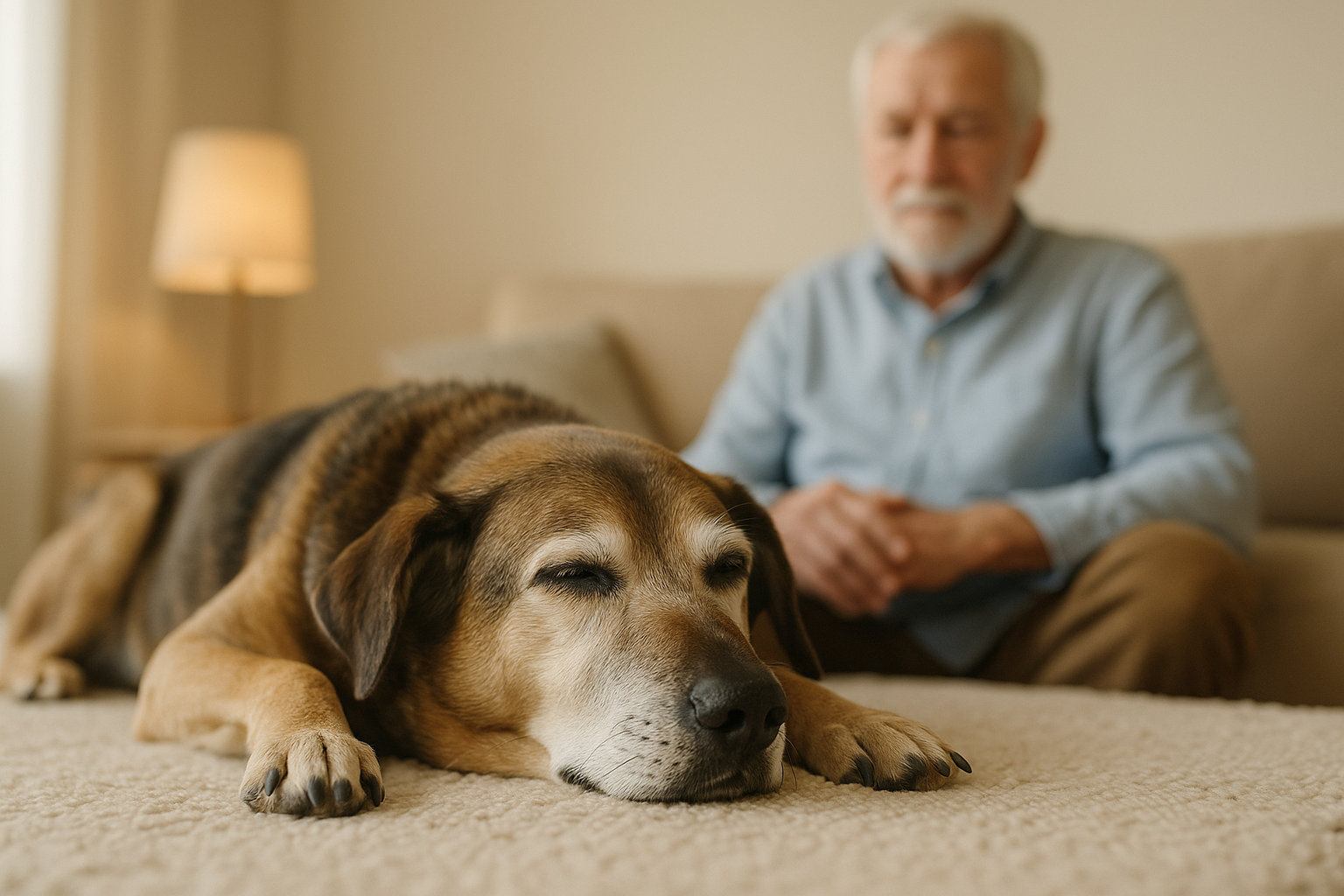
A calm guide for senior dogs and the humans who love them
Getting older means things change — for dogs and for the people caring for them.
Not every limp, slow morning, or skipped meal means something is seriously wrong.
The goal of this page is simple:
Help you know when to relax, when to keep an eye on things, and when to call the vet — without fear or panic.
From Aussie
“Some days I move slower.
Some days I nap more.
That doesn’t mean I’m broken — it just means I’m older.”
As dogs age, our bodies change just like yours do. What matters most is patterns, not one-time moments.
Usually Normal Aging
Monitor & Make Notes
These changes are common in early senior dogs and usually do not require an urgent vet visit:
- Slower to stand up or lie down
- Stiffness in the morning that improves as the day goes on
- Sleeping more than before
- Taking longer on walks
- Mild hearing or vision changes
- Occasional “off days”
What to do:
- Keep a simple notebook or phone note
- Write down what you notice and how often
- Mention it at your dog’s next regular vet visit
Worth Calling the Vet Soon (But Not an Emergency)
These signs mean it’s a good idea to call your vet within a few days for guidance:
- Limping that lasts more than 2–3 days
- Difficulty going up stairs or getting into the car
- Noticeable weight gain or weight loss
- Changes in appetite that last more than 48 hours
- New anxiety, confusion, or restlessness
- Accidents in the house after being well-trained
What to do:
Call your vet’s office and explain calmly what you’re seeing.
Most vets are happy to advise whether you should come in or keep monitoring.
Call the Vet Right Away (Urgent)
These signs should not wait:
- Sudden inability to stand or walk
- Severe or sudden pain (crying, yelping, shaking)
- Trouble breathing or heavy panting at rest
- Collapse, seizures, or fainting
- Vomiting or diarrhea lasting more than 24 hours
- Blood in urine, stool, or vomit
- Refusing food and water completely
Trust your instincts.
If something feels clearly wrong, it’s okay to call — even if it turns out to be nothing serious.
A Helpful Rule of Thumb
Ask yourself:
“Is this new, sudden, worsening, or affecting quality of life?”
If the answer is yes, it’s time to talk to the vet.
From Jeff
Caring for an aging dog can feel overwhelming — especially when you love them deeply and don’t want to miss something important.
This page isn’t here to replace your vet.
It’s here to help you pause, breathe, and make thoughtful decisions instead of reacting out of fear.
You’re doing better than you think.
Gentle Reminder
Early conversations with your vet often:
- Prevent bigger problems later
- Reduce emergency visits
- Help your dog stay comfortable longer
Talking early is not overreacting — it’s responsible care.
Love,
Aussie n Jeff