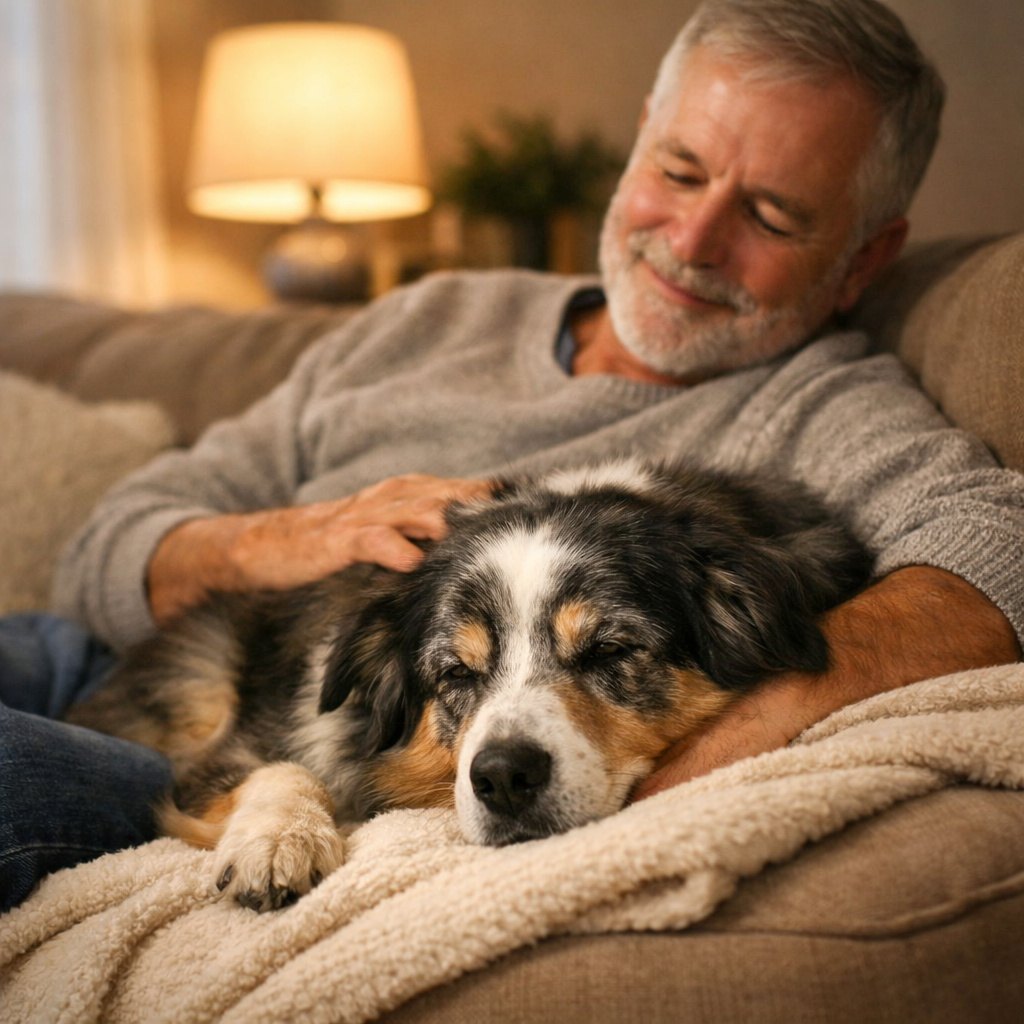
How to care for senior dogs with arthritis can be confusing for dog owners. Since Aussie is showing early signs of arthritis and stiffness, this motivated me to learn and share with you what we can do.
No Affiliate Links
You will never find any affiliate links in any of my articles on any of my websites, I feel that my guides are to educate you, not push products & services at you.
How to Care for Senior Dogs With Arthritis
A Guide for Older Dogs and the Humans Who Love Them
Watching your dog slow down can be one of the hardest parts of sharing life together. One day they’re jumping up for walks, and the next they hesitate — or take a few extra seconds to stand. If this sounds familiar, you’re not alone.
Arthritis is very common in senior dogs. And while it can’t be cured, it can be managed, often very successfully. With the right care, your dog can stay comfortable, connected, and happy for years to come.
This guide is here to help you understand what’s happening — and what you can gently do to help.
What Arthritis Looks Like in Senior Dogs
Arthritis doesn’t always show up as limping. Many dogs hide pain well, especially as they age. Common signs include:
- Stiffness after sleeping or resting
- Taking longer to stand up or lie down
- Hesitating before stairs, couches, or cars
- Slower or shorter walks
- Slipping on smooth floors
- Licking or chewing at joints
- Changes in mood, such as becoming quieter or less playful
If you’re noticing small changes, trust your instincts. Early awareness makes a big difference.
Aussie’s Corner

“The Morning I Knew Something Had Changed”
One morning, Aussie didn’t greet me the way he always had. He was awake, tail gently wagging, but he stayed on his bed a few seconds longer than usual. When he stood, it was slow — careful.
It wasn’t dramatic. No yelp. No limp.
Just a pause that hadn’t been there before.
That moment changed how I cared for him. I stopped brushing off the signs as “just age” and started paying attention to what he needed to feel comfortable again. That shift — from reacting to supporting — made all the difference for both of us.
Gentle Daily Care That Helps Arthritic Dogs
Keep Movement Gentle and Consistent
Movement keeps joints flexible, but too much can cause pain.
- Choose short, frequent walks instead of long ones
- Let your dog set the pace
- Avoid sudden bursts of activity
- Warm up slowly at the start of walks
Think movement for comfort, not exercise for fitness.
Make Your Home Joint-Friendly
Small changes at home can reduce daily strain:
- Orthopedic or memory-foam beds
- Non-slip rugs or yoga mats on smooth floors
- Raised food and water bowls
- Easy access to favorite resting spots
Comfort starts where your dog spends most of their time.
Gentle Heat and Cold Relief
Used correctly, simple therapies can help:
- Warmth helps stiff joints, especially in the morning
- Cold can reduce swelling after activity
Always keep sessions short, gentle, and never place directly on the skin.
Nutrition and Joint Support
Maintaining a healthy weight is one of the most important things you can do for an arthritic dog. Extra weight adds pressure to already-sore joints.
Many dog owners also discuss joint support with their vet, including:
- Omega-3 fatty acids
- Glucosamine and chondroitin
- Anti-inflammatory diet adjustments
Food and supplements don’t cure arthritis — but they can support comfort and mobility when used appropriately.
When to Talk to the Vet — Without Panic
Talking to your vet doesn’t mean you’re signing up for drastic treatments. In most cases, a vet can help with:
- Pain management options
- Personalized mobility plans
- Monitoring changes over time
Getting guidance early often prevents bigger problems later. If you’d like reassurance, our page “When to Talk to the Vet — Without Panic” was created specifically for situations like this.
Emotional Care Matters Too
Arthritis affects more than joints — it affects confidence.
Your dog may:
- Move less
- Play differently
- Need more reassurance
Adapt play instead of removing it. Keep routines steady. Talk to them. Sit with them.
Your dog doesn’t need to run to feel loved — they need to feel included.
One Thing You Can Do Today
Add one non-slip rug to a floor your dog walks on daily.
It’s a small change — but it can instantly reduce fear and strain.
From Jeff & Aussie
Arthritis changes how your dog moves — not how they love.
And it doesn’t mean their best days are behind them.
With patience, small adjustments, and steady care, senior dogs with arthritis can still enjoy peaceful walks, warm naps, and deep connection with the people they trust most.
At Dawg Solutions, we’re here to walk beside you — one gentle step at a time.
The Stages of Arthritis in Older Dogs
How You Can Help at Each Stage
Arthritis usually develops gradually, not all at once. Many dogs move through stages at different speeds, and some stay in the early stages for years with the right care.
Understanding these stages helps you respond with confidence instead of worry.
Stage 1: Early or Mild Arthritis
“Something feels different”
What you may notice:
- Slight stiffness after naps
- Slower starts to walks
- Hesitation before jumping or stairs
- Still playful and engaged
How you can help:
- Keep walks short and consistent
- Add soft bedding and non-slip rugs
- Begin gentle joint-friendly routines
- Monitor changes without panic
This is the best time to build comfort habits.
Stage 2: Moderate Arthritis
“Movement takes more effort now”
What you may notice:
- Stiffness lasts longer
- Walking pace slows
- Less interest in longer walks or play
- Occasional limping
- Difficulty with stairs or getting into cars
How you can help:
- Reduce walk length, increase frequency
- Use ramps or steps
- Discuss pain management with your vet
- Support joints with approved supplements
- Keep routines predictable and calm
Comfort-focused care makes a big difference here.
Stage 3: Advanced Arthritis
“Daily life needs adjustment”
What you may notice:
- Obvious discomfort or pain
- Trouble standing or lying down
- Avoidance of movement
- Changes in mood or appetite
- Slipping or falling
How you can help:
- Prioritize pain relief with veterinary guidance
- Limit activity to gentle movement only
- Provide easy access to food, water, and rest
- Offer emotional reassurance and presence
Your dog may move less, but still needs closeness.
Stage 4: Severe or Chronic Arthritis
“Comfort and dignity come first”
What you may notice:
- Very limited mobility
- Visible pain or distress
- Difficulty controlling posture
- Withdrawal or quiet behavior
How you can help:
- Work closely with your vet on comfort plans
- Focus on warmth, softness, and stability
- Assist with mobility when needed
- Maintain calm routines and gentle interaction
Browse Aussie & Jeffs Comfort & Mobility Resource
Reassurance for Dog Owners
Not every dog will experience every stage — and progression is not always linear. With early care and thoughtful adjustments, many dogs remain comfortable in the early or moderate stages for a long time.
You are not behind.
You are not failing your dog.
You are responding with love.
Jeffs Reminder

Pain in dogs is often quiet.
Changes you notice matter, even if they seem small.
Pet-Friendly Hobbies You Can Still Enjoy Together
Even With Arthritis
Arthritis may change how your dog moves, but it doesn’t end your bond. Many older dogs still want to participate, explore, and feel included — just in gentler ways.
These pet-friendly activities are easy on joints and big on connection.
Leisure Walks With Purpose
Instead of long walks, try short strolls focused on sniffing, not distance.
- Let your dog stop and explore
- Choose flat, familiar paths
- Walk during warmer parts of the day
For arthritic dogs, sniffing is often more satisfying than walking far.
Gentle Brain Games
Mental stimulation is surprisingly comforting.
Try:
- Hide treats in towels or snuffle mats
- Simple scent games indoors
- Puzzle toys designed for seniors
These activities engage the mind without stressing joints.
Companion Time (It Counts!)
Sometimes the best hobby is simply being together.
- Sitting outside together
- Watching birds from a window
- Gentle brushing or massage
- Talking to your dog (yes, it helps!)
Your presence is often your dog’s favorite activity.
Soft Indoor Play
Play doesn’t have to involve running.
- Rolling a soft toy across the floor
- Gentle tug (only if comfortable)
- Light fetch down a hallway
Watch your dog’s signals and stop early.
Nature Without Pressure
If walking is limited:
- Sit on a bench or porch together
- Let your dog enjoy fresh air and smells
- Visit quiet parks during off-hours
Being outdoors still matters — even without movement.
Routine-Based Activities
Older dogs find comfort in predictable moments.
Examples:
- Morning stretch and cuddle time
- Afternoon sniff break
- Evening quiet play or brushing
Routine creates safety — especially for dogs in pain.
Aussie’s Corner
“Our Slower Days”
Aussie doesn’t chase like he used to. But he still lights up when we sit together outside or play a short scent game in the living room. What changed wasn’t our connection — just the pace.
Slower days didn’t make our bond weaker.
They made it deeper.
Jeffs Reminder
Your dog doesn’t need big adventures.
They need shared moments.
And those moments still matter — deeply.
Aussie’s Corner
My Favorite Things to Do With Jeff
(Even on My Slower Days)
Hi, I’m Aussie.
I move a little slower now, and my joints don’t bend the way they used to. But I still love my days — especially when Jeff and I do these things together.
Here are some of my favorites.
Morning Stretch & Check-In
Every morning, Jeff gives me time to wake up before asking me to move. I stretch, he talks to me, and we take things slow. No rushing. No pressure.
It helps my body — and my confidence.
Porch Time
We sit outside together and watch the world go by. I don’t have to walk far to smell the air, hear birds, and feel the sun on my fur.
Some days, that’s all I need.
Scent Games in the Living Room
Jeff hides a few treats around the room and lets me find them at my own pace. No running. Just sniffing and thinking.
It makes me feel useful again.
Gentle Toy Time
We roll a soft toy back and forth on the floor. I don’t have to jump or chase — just engage.
Short games. Happy tail.
Quiet Companionship
Sometimes we don’t do anything at all. We sit. He rubs my ears. I nap. He’s there when I wake up.
That’s one of my favorite things.
Evening Wind-Down
At night, Jeff keeps things calm. A short sniff break, a warm bed, and a quiet voice. My body feels safer when the day ends gently.
What I Want You to Know
I don’t miss what I used to do.
I notice what we still do together.
When you slow down for me, I feel loved.
When you notice my needs, I feel safe.
And that makes every day a good day.
Love,
Aussie
Aussie’s Comfort Routine Checklist
A Gentle Daily Guide for Dogs With Arthritis
Use this checklist as a guide — not a rulebook. Some days you’ll do everything, some days just a few. What matters most is consistency and kindness.
Morning: Start Slow & Safe
☐ Give your dog time to wake up before moving
☐ Allow gentle stretching on their own terms
☐ Speak calmly and reassuringly
☐ Take a short, slow sniff break outside
☐ Check footing (non-slip rugs, clear pathways)
Midday: Support Comfort & Confidence
☐ Offer a soft, supportive resting spot
☐ Keep water easily accessible
☐ Engage in a short mental activity (scent game or puzzle)
☐ Avoid long or strenuous activity
☐ Observe movement without rushing or correcting
Afternoon: Gentle Engagement
☐ Short, relaxed walk or outdoor sit time
☐ Let sniffing replace distance
☐ Use ramps or steps if needed
☐ Adjust activity based on how your dog feels that day
Evening: Calm & Connection
☐ Light brushing or gentle massage (if tolerated)
☐ Quiet companionship time
☐ Maintain a familiar routine
☐ Keep the environment calm and predictable
Night: Wind Down With Care
☐ One last easy bathroom break
☐ Warm, comfortable bed in a quiet space
☐ Soft lighting and minimal noise
☐ Calm voice and reassurance before sleep
Reminder
✔ Progress isn’t measured in steps walked
✔ Good days and slower days both count
✔ Your presence is part of the treatment
If your dog feels safe, you’re doing it right.
Aussie & Jeff Shares
Caring for a senior dog with arthritis isn’t about fixing everything. It’s about listening, adjusting, and showing up in ways that help your dog feel safe and loved.
What You Can Do
Slower walks, softer routines, and quiet moments together may not look like much — but to your dog, they mean everything. With patience and small daily changes, arthritis doesn’t have to take away comfort, dignity, or joy.
Focus on Comfort
If you’d like more gentle guidance, you’re warmly invited to visit our Comfort & Mobility Resource Page, where you’ll find simple tips, supportive guides, and reassuring information created especially for older dogs and the people who care for them.
Discover More Pet-Friendly Hobbies For Older Adults & Senior Dogs
You don’t have to navigate this alone.
At Dawg Solutions, we’re here to walk beside you — one gentle step at a time.
Thank you for reading ” How to Care for Senior Dogs with Arthritis”,
- How To Help Dogs With Arthritis Move Better And Be HappierHow to help dogs with arthritis move better. We all feel for our older dog stuggling to move as they did when they were a young pup. There are some things we can do to help them move better, that is what I have to share with you in this article. Affiliate Disclosure: Some of… Read more: How To Help Dogs With Arthritis Move Better And Be Happier
- Ebooks For Senior Dog Health TipseBooks for senior dog health tips can be valuable resources to care for your older dog. We are going to learn more about them in this article, also I have some to recommend that you consider if you are interested. Affiliate Disclosure Some of the links on this website may be affiliate links. This means… Read more: Ebooks For Senior Dog Health Tips
- How Much Should My Dog Weigh To Be HealthyHow much should my dog weigh is a common questions dog owners ask themselves, this is especially common from dog owners with older dogs. Older dogs often are overweight like Aussie, not so much because you feed them too much as they are less active now. Amazon Disclosure As an Amazon Associate, I earn from… Read more: How Much Should My Dog Weigh To Be Healthy
- How To Calm My Scared Dog During StormsHow to calm my scared dog during storms is a common problem for dog owners. This is not only for younger dogs, but older dogs as well are terrified of storms. Now what can we do to calm them? Amazon Disclosure As an Amazon Associate, I earn from qualifying purchases. Any Amazon links used throughout… Read more: How To Calm My Scared Dog During Storms
- How To Choose Mobility Aids For Dogs Simple Easy TipsHow to choose mobility aids for dogs can be extremely confusing and frustrating, so I thought why not write you an article helping you learn how to choos mobility aids for your aging dog. Affiliate Disclosure As an Amazon Associate, I earn from qualifying purchases. Any Amazon links used throughout this website may earn a… Read more: How To Choose Mobility Aids For Dogs Simple Easy Tips



This is such a thoughtful and practical guide to caring for senior dogs with arthritis, Jeff.
I love how you break down both physical care and emotional comfort — from gentle exercise and joint support to cozy bedding and patience through slower days.
As someone who has seen first-hand how much our pets give us unconditional love, it’s comforting to have clear, compassionate advice on how to make their later years as comfortable as possible.
Your tips feel accessible for any dog owner, whether they’re just noticing stiffness or navigating more advanced arthritis care.
For those who have been through this with their own pets, what adjustments did you find most helpful in maintaining both mobility and joy in your dog’s daily life?
This is such a thoughtful and practical guide to caring for senior dogs with arthritis, Jeff.
I love how you break down both physical care and emotional comfort — from gentle exercise and joint support to cozy bedding and patience through slower days.
As someone who has seen first-hand how much our pets give us unconditional love, it’s comforting to have clear, compassionate advice on how to make their later years as comfortable as possible.
Your tips feel accessible for any dog owner, whether they’re just noticing stiffness or navigating more advanced arthritis care.
For those who have been through this with their own pets, what adjustments did you find most helpful in maintaining both mobility and joy in your dog’s daily life?
Hello Ms Jennifer
Its so nice for you to read and comment on my article on caring for senior dogs with arthritis. Aussie just turend 7 yesterday December 23rd. He has mild arthritis, so what adjustments we had to make for him was to shorten our walks because he experiences leg cramps if we walk very far at one time now.
Jeff