How to calm my scared dog during storms is a common problem for dog owners. This is not only for younger dogs, but older dogs as well are terrified of storms. Now what can we do to calm them?
Amazon Disclosure
As an Amazon Associate, I earn from qualifying purchases. Any Amazon links used throughout this website may earn a commission when you purchase through them.
Jeffs Promise To You
You will never find any affiliate links in any of my step-by-step guides on any of my websites, I feel that my guides are to educate you, not push products & services at you.
Thank you for your support and understanding,
Jeff
How to Calm My Scared Dog During Storms
It is very common for dogs to develop or worsen their storm anxiety as they enter their senior years. While it’s heart-wrenching to watch, understanding the “why” can help you manage it.
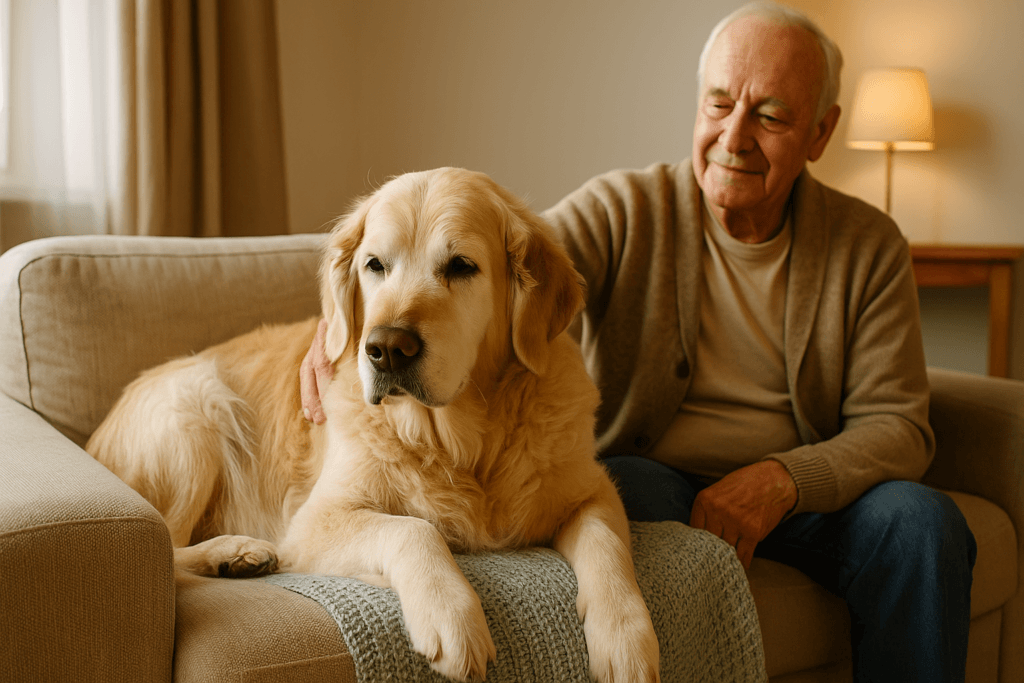
Understanding Older Dogs
In older dogs, storm phobia is rarely just about the noise. It is usually a combination of physical, sensory, and cognitive changes. Let us get into this in detail to help you understand how storms could be affecting your senior dog.
1. Sensory Decline & Confusion
As dogs age, their vision and hearing often decline. This might seem like it would make them less afraid of loud noises, but it often does the opposite.
Disorientation
If a dog can’t see or hear clearly, they can’t pinpoint where a “threat” is coming from. A muffled rumble of thunder becomes a vague, terrifying presence they can’t escape.
Cognitive Dysfunction
Similar to dementia in humans, some senior dogs experience Canine Cognitive Dysfunction. This makes them more prone to confusion and less able to cope with changes in their environment.
2. Physical Discomfort
This is a factor many owners don’t realize
Static Shocks
During a storm, static electricity builds up in the air. Older dogs, especially those with thicker or longer coats, can feel actual “shocks” or tingling in their fur.
Joint Pain
If your dog has arthritis, the drop in barometric pressure before a storm can cause their joints to swell or ache. They begin to associate the “smell” and “feel” of an oncoming storm with physical pain.
3. Heightened Sensitivity
Dogs can sense a storm hours before we can. They feel the change in air pressure, smell the ozone, and hear low-frequency rumbles far beyond human range. For an older dog whose world is already becoming less predictable, these “invisible” changes can trigger a flight-or-fight response.
How to Calm My Scared Dog During The Storm by Jeff
Create a “Safe Den”
Place a bed in an interior room (like a closet or bathroom) where there are no windows. This blocks the flashes of lightning and muffles the sound.
The “Anti-Static” Trick
Many behaviorists suggest that rubbing your dog down with a standard unscented dryer sheet can help reduce the static buildup in their fur (ensure they don’t lick it).
Background Noise
Use white noise, a loud fan, or “calming dog music” (available on YouTube/Spotify) to mask the sudden claps of thunder.
Compression Vests
Works like swaddling a baby; the gentle pressure can lower a dog’s heart rate and provide a sense of security.
Consult Your Vet
Since your dog is older, it’s worth a check-up. They can rule out pain-related anxiety and may prescribe a “situational” medication (like Sileo or Trazodone) that you only give when a storm is in the forecast.
How to Tell Your Dog is in Pain During Storms
It can be very difficult to distinguish between “I am scared” and “I am hurting,” because the symptoms overlap. However, for a senior dog, the physical toll of a storm is often a “double hit”: the drop in barometric pressure causes joint inflammation, and the anxiety of the storm causes them to tense their muscles, which makes that joint pain even worse.
Here is how you can tell if your older dog’s storm reaction is being driven by physical pain
1. The “Pre-Storm” Stiffness
Dogs can sense a drop in barometric pressure long before the first cloud appears.
The Sign
If you notice your dog is limping, moving slowly, or struggling to stand up from their bed before any thunder starts, they are likely feeling the pressure change in their joints.
Why it happens
Lower air pressure allows tissues around the joints to expand slightly, which puts pressure on the nerves of an arthritic dog.
2. Difficulty Settling or “Restless Pacing”
While pacing is a common sign of anxiety, look at how they are pacing.
Pain Indicators
If your dog keeps trying to lie down but gets up immediately, or if they “hover” over their bed without fully committing to lying down, it’s often because the act of bending their joints to get into a resting position is painful.
The “Hunched” Posture
An anxious dog usually lowers their head and tucks their tail. A dog in pain often has a roached (arched) back or holds their body very stiffly to avoid jarring a sore limb.
3. Unusual “Touch Sensitivity”
During a storm, an anxious dog may seek your attention and want to be petted.
The Pain Test
If your dog normally loves pets but suddenly flinches, stiffens, or low-growls when you touch their hips, lower back, or shoulders during a storm, they are likely experiencing a pain flare-up.
Licking Joints
Look for “over-grooming” or obsessively licking a specific leg or joint during the storm. This is a classic sign of localized pain.
4. Facial Indicators
Dogs have a “pain face” that is subtly different from a “fear face.”
Fear Face
Wide eyes (showing the whites), ears pinned back, and heavy, fast panting with a “spatulate” tongue (tongue is wide and floppy).
Pain Face
A “fixed” or “worried” stare, squinting eyes, and panting that is shallower and more rhythmic. You might also see a “grimace” where the lips are pulled back slightly even when not panting.
Aussie & Jeffs Tip

Observe your dog the next time it rains without thunder. If they still show signs of restlessness or stiffness during a simple rainy day, it is almost certainly a barometric pressure/pain issue rather than a noise phobia.
When You Dog Shakes Uncotrollably During Storms
When a dog is shaking uncontrollably, they have moved past “mild worry” into a full-blown panic attack. At this stage, their body is flooded with adrenaline, and they are physically unable to “calm down” on their own.
Here is an immediate action plan to help ground them and stop the tremors.
1. The “Grounding” Wrap
If you don’t have a ThunderShirt, you can create a DIY version immediately using a stretchy t-shirt or an Ace bandage.
How it works
This is called “maintained pressure.” It works on the sensory system to lower the heart rate and stop the muscle tremors.
Aussie & Jeffs Tip
If your dog has long fur, rub them down with an unscented dryer sheet first to discharge the static electricity that often causes senior dogs to feel “prickling” or shocks during storms.
2. Relocate to the “Quiet Zone”
Do not leave your dog in a room with large windows. The flashes of lightning act as a visual “reset” for their fear, making it impossible for the shaking to stop.
The Bathroom or Closet
These are often the best spots. Bathrooms are frequently grounded (due to plumbing) and lack windows.
Heavy Insulation
Pile blankets on top of them (if they allow it) or create a “cave” under a desk. The weight and muffled sound provide a sense of physical security.
3. Sensory Overload
You need to drown out the low-frequency rumbles of thunder that we can’t even hear, but they can.
White Noise + Music
Turn on a bathroom fan, a loud box fan, AND play music. Research shows that Reggae and Soft Rock actually calm dogs more effectively than classical music.
TV Distraction
Some owners find that leaving a TV on a “busy” channel with constant talking (like news or a sitcom) helps the dog feel less alone and masks the outside noise.
4. Direct Intervention for Severe Shaking
If the shaking is so intense they can’t stand or are panting heavily
The “Lick Mat” Trick
Licking is a self-soothing behavior for dogs that lowers cortisol. Smear peanut butter or plain yogurt on a plate or a Lick Mat. Even a dog in a state of panic will often start licking as a primal reflex, which helps break the “shake cycle.”
Pheromones
Use an Adaptil spray or diffuser. It mimics the calming scent a mother dog releases, providing a chemical “all clear” signal to their brain.
When to Call the Vet
Uncontrollable shaking in a senior dog is physically exhausting and can actually lead to heat exhaustion (hyperthermia) because their muscles are working so hard.
If this happens every storm, you should ask your vet about Situational Medications. These are fast-acting pills you only give when a storm is coming
Sileo
A gel specifically FDA-approved for noise aversion.
Trazodone or Alprazolam (Xanax)
Common prescriptions that help “turn off” the panic response.
Gabapentin
Especially helpful for senior dogs, as it treats both the anxiety and the nerve/joint pain caused by pressure changes.
Aussie & Jeffs Disclaimer
Consult your vet before ever giving your dog any type of medications, the information in this content is purely educational and not a treatment plan instead of talking to your dogs vet.
Time to Take Your Dog to the Vet
When a dog is shaking uncontrollably, they have moved from “fear” into a “panic state.” For a senior dog, this level of distress is not just emotionally taxing—it can be physically dangerous.
Because senior dogs are less resilient, you should seek professional help if you notice any of the following signs
1. Physical Danger Zones
Excessive Panting or Drooling
If your dog pants so hard that their tongue becomes dark red or purple, or if they are “foaming” at the mouth with thick saliva, they are at risk of heat exhaustion.
Inability to Recover
If the storm passes but your dog continues to shake, pant, or hide for more than 2–3 hours afterward, their nervous system is “stuck” in a loop and needs medical intervention to reset.
Self-Injury
If your dog tries to “dig” through floors, chew through doors, or jump through windows to escape the noise, they need immediate professional help to prevent a tragedy.
2. The “Pain Loop”
Persistent Stiffness
If you notice your dog is more “arthritic” or walks with a hunched back for several days after a storm, the stress of the event is likely causing a severe inflammation flare-up.
Refusing Food/Water
If your dog stops eating or drinking during or after a storm, it’s a sign that their cortisol levels are so high they have shut down their basic survival instincts.
3. Signs of “Canine Dementia”
Since your dog is older, the storm might be a “trigger” for underlying cognitive decline. Talk to your vet if you see:
- Staring into space or getting “stuck” in corners during or after the storm.
- Nighttime waking or pacing that starts even when there is no weather event.
- Getting “lost” in familiar rooms or going to the wrong side of the door.
Never put off consulting your vet if your dog has these warning signs, he or she is need of professional help as soon as possible.
What to Ask Your Veterinarian
When you book the appointment, tell them you have a senior dog with “severe noise aversion and potential barometric pressure sensitivity.” Ask specifically about
Sileo
An FDA-approved gel for noise phobia that doesn’t “drape” the dog (make them a zombie) but stops the fear response.
Gabapentin
Great for seniors because it addresses both nerve pain from pressure changes and anxiety.
Situational Meds
Ask for “fast-acting” medications like Trazodone or Xanax that you only use when a storm is in the forecast.
Warning: Avoid using “Acepromazine” (often called “Ace”) alone. While it stops a dog from moving, research shows it doesn’t stop the fear. It can actually make things worse because the dog is “locked” in a still body while feeling even more terrified.
Dawg Solutions Helpful Pages
Dawg Solultions is dedicated to providing you with educational content not intended to replace consulting with your dogs vet.
Aussie & Jeffs Favorite Resources
This is widely considered the gold standard for at-home anxiety management. It was founded by veterinarians to help pets live without fear, anxiety, and stress.
Best for
Visual guides on dog body language, videos on how to set up a “safe room,” and tips for managing noise phobias.
Lap of Love (Senior Pet Health)
While they are known for end-of-life care, their blog is one of the best resources specifically for senior dog behavioral changes.
Best for
Understanding the intersection of dementia, chronic pain, and storm anxiety.
This nonprofit focuses exclusively on senior dogs. They provide expert advice on natural ways to treat anxiety in older pups and how to differentiate between “old age” and “fear.”
Best for
Advice on low-impact exercise and mental stimulation to keep senior dogs calm.
This is the client-facing side of the Veterinary Information Network, which is where vets go to get their data. It provides medically accurate, “no-fluff” information on anxiety medications and supplements.
Best for
Reading up on the pros and cons of specific medications like Sileo or Trazodone before your vet visit.
Storm Log
Many of these sites recommend keeping a Storm Log.
Before you go to the vet, try to record
When it starts
Does the dog react to the rain, the pressure change (before it rains), or just the thunder?
The duration
How long after the storm ends does it take for them to stop shaking?
The intensity
On a scale of 1-10, how “reachable” is your dog when they are panicking?
Aussie & Jeff Shares
Helping a senior dog through a storm is about more than just comfort; it’s about managing their sensory and physical environment. Since we’ve discussed why they’re scared and how to spot pain, here are some final “pro-level” tips and natural aids to help break the cycle of panic.
1. The “Sound Sanctuary” Technique
Research from the University of Glasgow and other studies shows that dogs respond best to specific genres of music.
The Best Genres
Reggae and Soft Rock were found to be the most effective at lowering heart rates and cortisol levels. Solo piano with a slow tempo (like those found in Through a Dog’s Ear) is also highly effective.
Avoid “Heavy” Classical
While light classical is good, complex or loud orchestral pieces (like Wagner or Beethoven) can actually increase stress.
DOGTV or Golf
Some owners find that leaving the Golf Channel on helps. The whispering commentators and the consistent, low-key background sounds of nature are naturally soothing.
2. High-Value “Brain Games”
If your dog is still willing to eat, use a distraction that requires licking or chewing, which are primal self-soothing behaviors.
The Frozen Lick Mat
Smear a Lick Mat with peanut butter or wet food and freeze it. The cold can also help lower their body temperature if they are panting heavily.
Snuffle Mats
If they prefer to use their nose, a Snuffle Mat hidden with high-value treats can redirect their focus from the noise to their “job.”
Since Dawg Solutions is an educational website, I don’t include links to products in my content. This allows me to focus more on solutions than pushing products.
Thank you for your support and reading ” How to Calm My Scared Dog During Storms”, this information is from my research and experience with my own senior dog, Aussie.
Jeff/ Dawg Solutions
Amazon Disclosure
As an Amazon Associate, I earn from qualifying purchases. Any Amazon links used throughout this website may earn a commission when you purchase through them.
Jeffs Promise To You
You will never find any affiliate links in any of my step-by-step guides on any of my websites, I feel that my guides are to educate you, not push products & services at you.
Thank you for your support and understanding,
Jeff
- How To Help Dogs With Arthritis Move Better And Be HappierHow to help dogs with arthritis move better. We all feel for our older dog stuggling to move as they did when they were a young pup. There are some things we can do to help them move better, that is what I have to share with you in this article. Affiliate Disclosure: Some of… Read more: How To Help Dogs With Arthritis Move Better And Be Happier
- Ebooks For Senior Dog Health TipseBooks for senior dog health tips can be valuable resources to care for your older dog. We are going to learn more about them in this article, also I have some to recommend that you consider if you are interested. Affiliate Disclosure Some of the links on this website may be affiliate links. This means… Read more: Ebooks For Senior Dog Health Tips
- How Much Should My Dog Weigh To Be HealthyHow much should my dog weigh is a common questions dog owners ask themselves, this is especially common from dog owners with older dogs. Older dogs often are overweight like Aussie, not so much because you feed them too much as they are less active now. Amazon Disclosure As an Amazon Associate, I earn from… Read more: How Much Should My Dog Weigh To Be Healthy
- How To Calm My Scared Dog During StormsHow to calm my scared dog during storms is a common problem for dog owners. This is not only for younger dogs, but older dogs as well are terrified of storms. Now what can we do to calm them? Amazon Disclosure As an Amazon Associate, I earn from qualifying purchases. Any Amazon links used throughout… Read more: How To Calm My Scared Dog During Storms
- How To Choose Mobility Aids For Dogs Simple Easy TipsHow to choose mobility aids for dogs can be extremely confusing and frustrating, so I thought why not write you an article helping you learn how to choos mobility aids for your aging dog. Affiliate Disclosure As an Amazon Associate, I earn from qualifying purchases. Any Amazon links used throughout this website may earn a… Read more: How To Choose Mobility Aids For Dogs Simple Easy Tips
As someone with a senior dog whose storm anxiety has worsened with age, this article was a revelation. I never connected his pre-storm stiffness and restlessness to arthritis pain from the pressure drop. Your explanation of the difference between a “fear face” and a “pain face” was particularly eye-opening. The actionable tips, like using a dryer sheet for static and the “lick mat” trick for severe shaking, are exactly the kind of practical, immediate help we need. Thank you for this incredibly insightful and gentle guide!
Thank you Cian,
I do hope the static dryer sheet and lick mat trick work for your older dogs during storms, I would love to hear how these works for your dog if you have the time next time you visit my website
Jeff