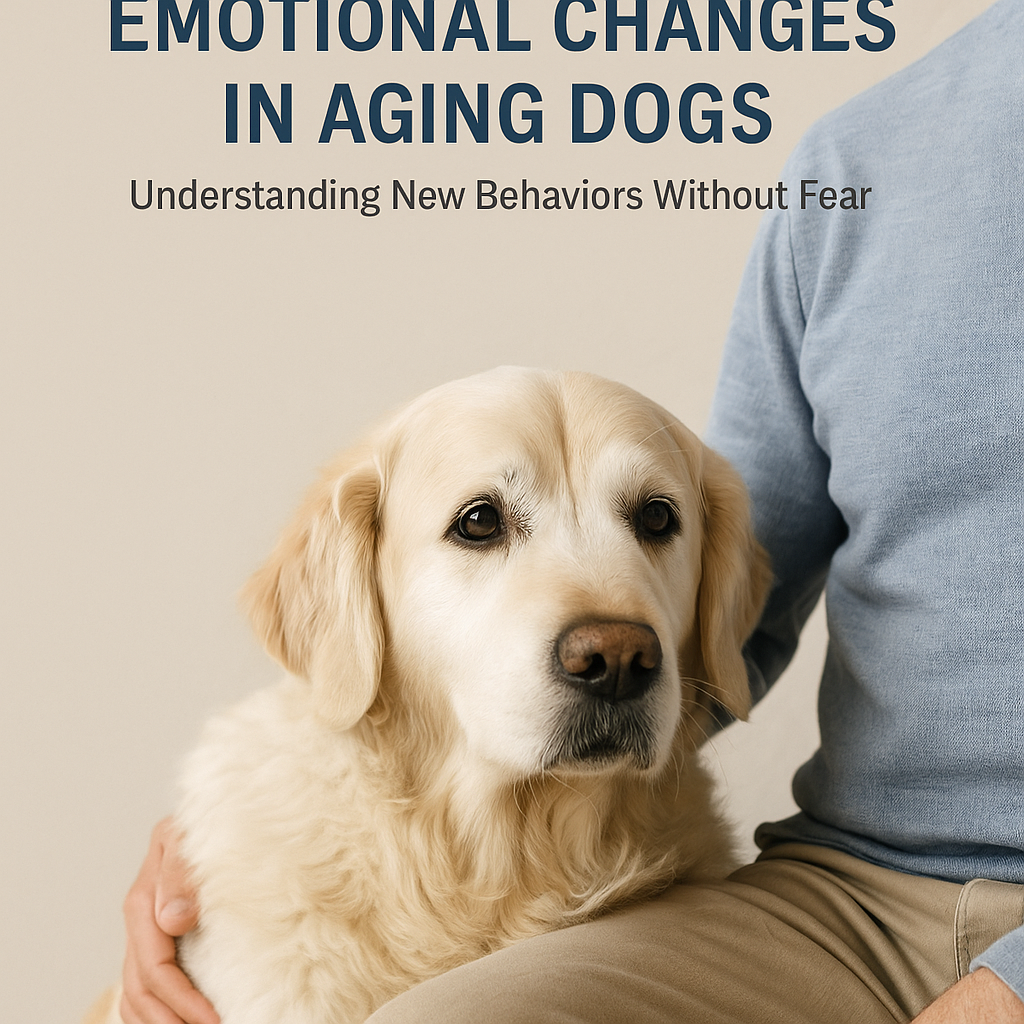
Understanding New Behaviors Without Fear
From Aussie
“I still feel the same inside — I just show it a little differently now.”
I still love being near you.
I still enjoy our quiet moments.
Sometimes I just need a little more reassurance.
If I seem clingier, quieter, or unsure at times, it’s not because you’re doing anything wrong.
From Jeff
As dogs age, emotional changes are just as common as physical ones — and they’re often misunderstood.
Many senior dog owners worry when their dog:
- Becomes more attached
- Seems anxious or unsure
- Sleeps more
- Startles easily
- Prefers quiet time
These changes are often part of normal aging, not a sign that something terrible is happening.
Increased Clinginess or Attachment
Some aging dogs prefer staying closer to their people.
This can happen because:
- Familiar presence feels comforting
- Vision or hearing may be changing
- Routines feel safer when shared
Wanting closeness is usually about security, not distress.
From Aussie
“Being near you helps me feel steady.”
Changes in Confidence
Older dogs may hesitate more than they used to.
You might notice:
- Pausing before entering rooms
- Hesitation with stairs or doorways
- Caution in new situations
This often reflects awareness — not fear.
Sensitivity to Noise or Activity
As dogs age, loud or sudden sounds may feel overwhelming.
Helpful responses include:
- Speaking calmly
- Avoiding sudden movements
- Keeping environments predictable
- Offering reassurance without fuss
Calm reactions from you help your dog stay calm too.
From Aussie
“I feel better when things are quiet.”
Sleeping More — and Deeper
Older dogs often rest more.
This may look like:
- Longer naps
- Deeper sleep
- Less interest in constant activity
More sleep usually means your dog is listening to their body.
Occasional Confusion or Disorientation
Some dogs may briefly seem unsure of where they are or what’s happening.
Helpful approaches:
- Keep routines consistent
- Avoid rearranging furniture
- Use gentle verbal cues
- Stay patient
Confusion can be unsettling — but it’s often manageable with familiarity.
From Aussie
“I appreciate your patience.”
Your Emotions Matter Too
Caring for an aging dog can bring unexpected feelings:
- Worry
- Guilt
- Sadness
- Fear of what’s ahead
These feelings are normal — and you’re not alone in them.
Aging doesn’t erase the bond you share.
Often, it deepens it.
When Emotional Changes Deserve Attention
It’s wise to talk with your veterinarian if you notice:
- Sudden personality changes
- Extreme anxiety
- Aggression
- Persistent confusion
- Loss of interest in interaction
Asking early questions is always an act of care.
From Aussie
“Thank you for noticing how I feel.”
Even when I change, I still feel safe with you.
Aging Doesn’t Take Away Love
Many aging dogs remain:
- Loving
- Connected
- Content
- Emotionally present
They may simply express it more quietly.
A Gentle Reminder
Dawg Solutions provides educational information only and does not replace veterinary advice. If emotional or behavioral changes concern you, your veterinarian can help guide you.
Love,
Aussie & Jeff