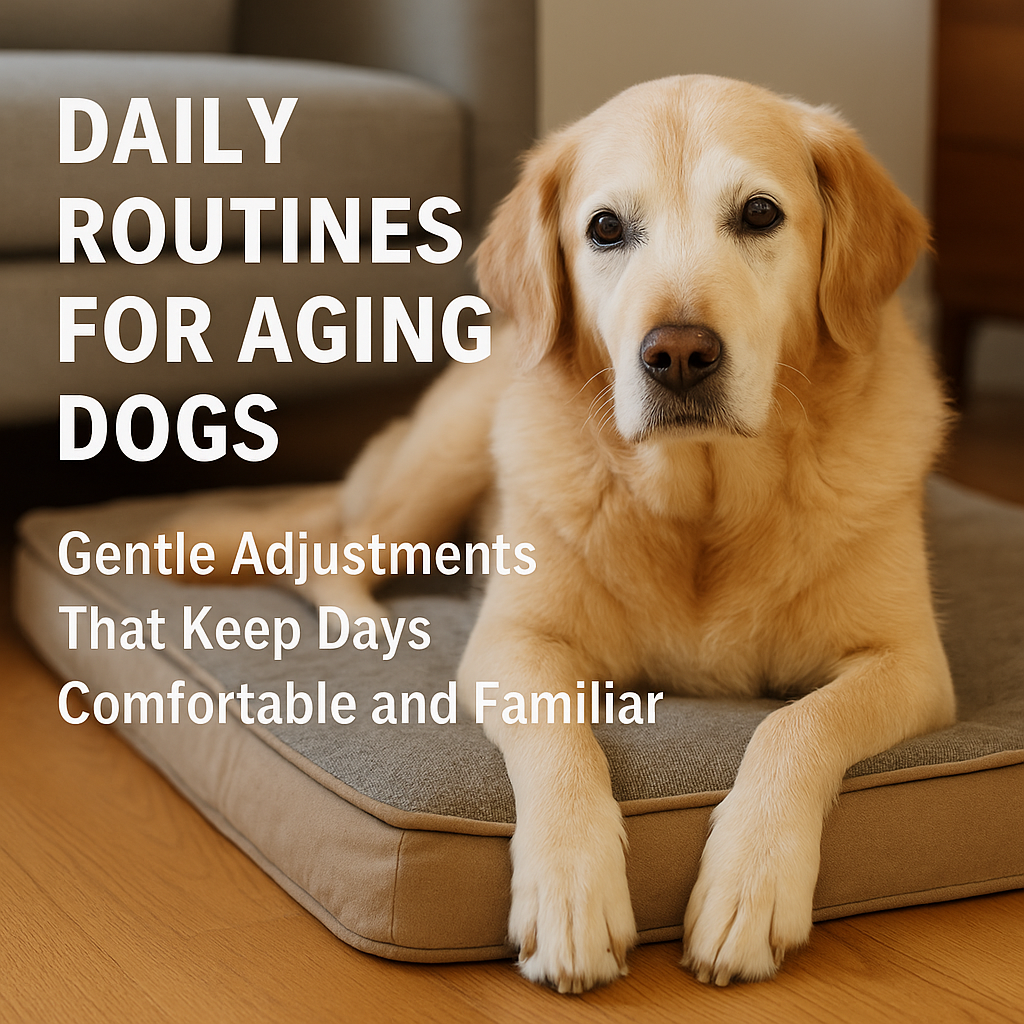
Gentle Adjustments That Keep Days Comfortable and Familiar
From Aussie
“I still like our days. I just need them to be a little softer now.”
I still wake up happy to see you.
I still enjoy going outside.
I still like our time together.
I just don’t need as much — and I don’t need it as fast.
From Jeff
As dogs age, routines become more important — not less.
Familiar schedules help aging dogs feel:
- Safe
- Oriented
- Calm
- Confident
You don’t need to give up the routines your dog enjoys. You just need to adjust them gently to match how your dog feels now.
Morning Routines: Starting the Day Slowly
Mornings can be the stiffest time for many older dogs.
Gentle ways to help:
- Allow extra time before getting up
- Avoid rushing outside
- Let your dog stretch naturally
- Use calm voices and movements
A slow start often leads to a better day.
From Aussie
“I feel better when I can wake up at my own pace.”
Walks: Shorter Can Still Be Meaningful
Many aging dogs still enjoy walks — just not long ones.
Helpful adjustments:
- Shorter walks, more often
- Slower pace
- Fewer hills or uneven surfaces
- Letting your dog lead the speed
A walk doesn’t have to be long to be enjoyable.
Feeding Routines: Comfort and Consistency
Eating habits may change slightly with age.
What helps:
- Feeding at the same times each day
- Easy access to food and water
- Comfortable standing or sitting position
- Watching for appetite changes
Consistency builds comfort and reassurance.
From Aussie
“I like knowing when it’s time to eat.”
It makes my day feel familiar.
Rest Time: More Sleep Is Normal
Older dogs often sleep more — and that’s okay.
You may notice:
- Longer naps
- Deeper sleep
- Less interest in constant activity
Rest helps aging bodies recover and feel better.
Bathroom Breaks: Patience Matters
Bathroom needs can change with age.
Gentle tips:
- More frequent opportunities
- Extra time outdoors
- Calm encouragement
- No scolding for accidents
Changes here are common — and never intentional.
From Aussie
“Thank you for being patient with me.”
Evening Routines: Winding Down Calmly
Evenings should feel predictable and peaceful.
Helpful habits include:
- Quiet time before bed
- Familiar bedtime routines
- Easy access to resting areas
- Soft lighting
A calm evening often means a better night’s rest.
Balancing Activity and Rest
Aging dogs still benefit from movement — just in moderation.
Look for:
- Willingness, not endurance
- Enjoyment, not effort
- Comfort over completion
It’s okay to stop early.
From Aussie
“I still enjoy our time together.”
Even quieter days are good days.
When Routine Changes Deserve Attention
Check in with your veterinarian if you notice:
- Sudden routine refusal
- Major appetite loss
- Confusion or disorientation
- Sharp behavior changes
Routine changes can sometimes signal discomfort.
Small Adjustments, Big Comfort
You don’t need to change everything.
Even one small routine adjustment can:
- Reduce stress
- Improve comfort
- Strengthen your bond
Your awareness is what matters most.
From Aussie
“Thank you for keeping my days familiar.”
I still feel safe with you.
A Gentle Reminder
Dawg Solutions provides educational information only and does not replace veterinary care. Always consult your veterinarian if you have concerns about your dog’s health or behavior.
Love,
Aussie & Jeff