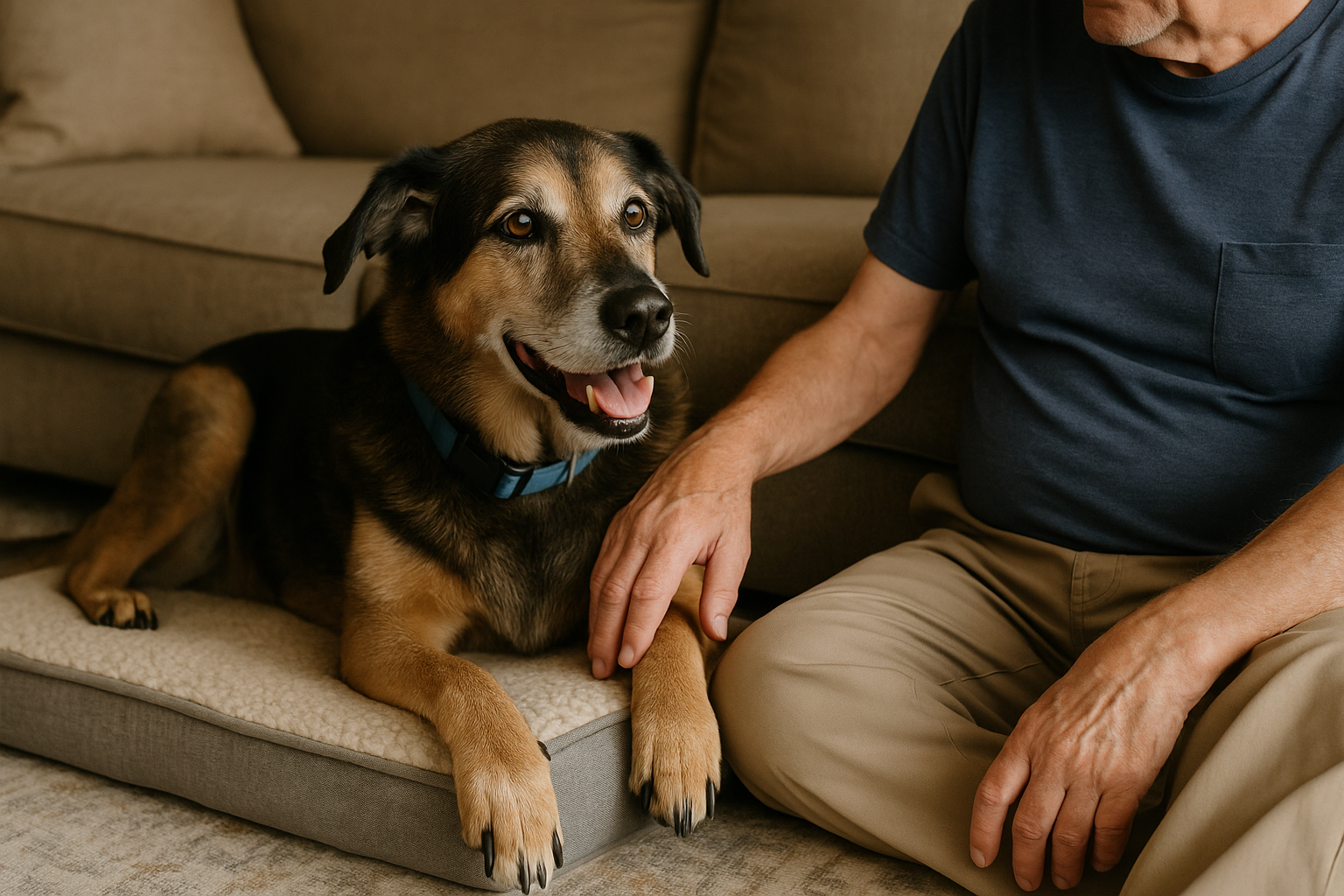
Simple Ways to Help Your Dog Move and Rest More Easily
Amazon Affiliate Disclosure
Some of the products shared on this page are affiliate links. If you choose to purchase through them, it helps support Dawg Solutions at no extra cost to you. We only share tools that align with our focus on comfort, safety, and gentle support for senior dogs.
Thank you supporting Dawg Solutions,
Aussie & Jeff
From Aussie
“I still want to get up and move — I just need a little help now.”
Some days my legs feel stiff.
Some days I need a moment before I stand.
I’m not in a hurry anymore — and I don’t want you to be either.
When you help me gently, everything feels easier.
From Jeff
As dogs age, comfort and mobility become closely connected.
Many changes that look concerning at first can often be helped with small, thoughtful adjustments. You don’t need to overhaul your home or push your dog to “stay active” in uncomfortable ways.
This guide focuses on gentle support, not forcing movement.
Helping Your Dog Get Up and Lie Down
One of the first things many owners notice is how long it takes their dog to stand or settle.
What Helps:
- Let your dog take their time
- Avoid pulling or lifting unless absolutely necessary
- Encourage movement with calm voice cues
- Use supportive surfaces where your dog rests
A little patience goes a long way.
From Aussie
“Please don’t rush me.”
When I know I have time, I move more comfortably.
When I feel hurried, everything feels harder.
Making Floors Safer
Smooth floors can become challenging for older dogs.
Simple solutions:
- Area rugs or runners
- Non-slip mats near beds and food bowls
- Keeping nails trimmed
- Avoiding sudden turns on slick surfaces
These small changes can reduce slipping and build confidence.
Stairs, Steps, and Height Changes
Many dogs hesitate with stairs as they age.
Gentle options:
- Encourage fewer trips up and down
- Create rest breaks
- Use ramps or low steps where possible
- Avoid lifting unless your dog is comfortable with it
Not all dogs need to use stairs the same way they used to — and that’s okay.
From Aussie
“I’m not scared. I’m just careful.”
When I pause, I’m thinking.
When I hesitate, I’m listening to my body.
Choosing Comfortable Resting Spots
Where your dog rests matters more than you might think.
Helpful tips:
- Provide soft but supportive bedding
- Place beds where your dog can see you
- Avoid drafts or hard floors
- Consider more than one resting spot
Comfort often brings better sleep — and better days.
Adjusting Daily Routines
Aging dogs often do best with predictable, flexible routines.
You may find it helpful to:
- Shorten walks but keep them frequent
- Allow more time for movement
- Keep feeding and bathroom schedules consistent
- Reduce high-impact activities
Less intensity doesn’t mean less enjoyment.
From Aussie
“I still enjoy our time together.”
Even slower walks are still walks.
Even quieter days are still good days.
When Extra Support May Be Needed
Sometimes changes in comfort and mobility deserve professional attention.
Check in with your veterinarian if you notice:
- Persistent pain signs
- Sudden refusal to move
- Significant difficulty standing
- Rapid changes in behavior
Asking questions early is always a kindness.
Comfort Is About More Than Movement
Mobility isn’t just physical — it’s emotional too.
When dogs feel supported:
- They move more confidently
- They rest more peacefully
- They feel safer
Your presence and patience matter just as much as any adjustment.
From Aussie
“Thank you for helping me feel steady.”
I still want to move through life with you.
Just at a pace that feels right now.
Jeff & Ausse Shares
As dogs grow older, mobility challenges and arthritis can quietly change how they move, rest, and enjoy daily life. Simple actions like standing up, climbing stairs, or settling into a comfortable position may become harder than they once were.
At Dawg Solutions, our focus is on gentle, practical ways to help senior dogs stay comfortable, supported, and safe—without hype or miracle claims.
This page shares comfort and mobility tools that many dog parents use to reduce joint strain, improve stability, and make everyday movement easier for aging dogs.
Trouble Standing Up or Lying Down
One of the earliest signs of mobility issues is stiffness after rest. Dogs may hesitate before standing, reposition frequently, or avoid lying down altogether.
Helpful Comfort Solutions
Orthopedic Dog Beds
- Provide joint support and pressure relief
- Help reduce stiffness after rest
- Best for dogs with arthritis or hip issues
- Note: Firm support matters more than thickness
Orthopedic Dog Beds — Comfort for Joints & Rest
A high-quality orthopedic dog bed can make a real difference for senior dogs with arthritis. These beds are usually made with memory foam or supportive foam cores that help distribute weight evenly and reduce pressure points on joints, which may ease stiffness and improve overall comfort during rest.
How to Choose the Right Bed
Here are a few tips to help your visitor pick a bed that fits their dog:
- Size & Weight: Always match the bed size to your dog’s length from nose to tail plus a few inches so they can stretch comfortably.
- Support Level: Thicker orthopedic foam tends to provide more joint relief — especially useful for dogs with arthritis or hip issues.
- Cover & Care: Removable, machine-washable covers make cleanup easier, especially if your senior dog has occasional accidents.
- Dog’s Preference: Some dogs love low, flat beds; others like bolstered or nest-style designs for head and neck support.
Memory Foam Mats
- Useful in favorite resting spots
- Easier for dogs that struggle with thick beds
- Good for kitchens or near family areas
Memory Foam & Support Mats — Comfortable Spots for Rest
Senior dogs with joint pain often go to the same spots to rest — by the couch, near family, or in favorite sunny patches of the floor. But hard surfaces can make stiffness and discomfort worse after rest. A supportive foam mat gives gentle cushioning without the bulk of a big bed — perfect for kitchens, living rooms, or favorite lazing spots.
Here are some well-reviewed foam mats that many dog parents choose for extra comfort and ease:
Bedsure Memory Foam Pet Mat
Why it’s helpful:
- Thick memory foam supports joints and relieves pressure after lying down
- Low profile makes it easy for senior dogs to step onto
- Soft, cozy cover feels inviting without overheating
- Machine-washable cover for easy cleanup
Good for: Dogs who like low, cushioned resting spots, or pets who nap in multiple areas around the home.
What to keep in mind: Memory foam can retain heat — choose a breathable cover if your dog tends to get warm.
Milliard Tri-Fold Orthopedic Pet Mat
Why it’s helpful:
- Tri-fold design gives you flexible placement — fold for support or unfold for a larger rest surface
- Supportive foam eases pressure on hips and shoulders
- Great option for doorway, hallway, or favorite family area
Good for: Dogs who prefer a larger play-and-rest surface but still need joint support.
What to keep in mind: Cover might be less plush than some beds — prioritize foam density over fluff for arthritis comfort.
FurHaven Thermo-Orthopedic Foam Mat
Why it’s helpful:
- Contoured foam helps align spine and joints during rest
- Thermo-regulated cover helps keep dogs comfortable in varied temperatures
- Washable cover makes maintenance simpler
Good for: Dogs with arthritis and sensitivity to temperature changes.
What to keep in mind: Slight contouring may not suit every dog’s sleeping style — some prefer flat mats.
PetFusion Ultimate Memory Foam Pet Pad
Why it’s helpful:
- High-density memory foam offers deeper joint relief than basic mats
- Great supportive surface for older dogs who still move around the house
- Sleek, low profile works well in living rooms or under favorite lounging chairs
Good for: Senior dogs who benefit from deeper support without a full bed.
What to keep in mind: Not as plush as raised beds — best as a supportive mat close to daily activity.
Raised Food & Water Bowls
Comfortable Mealtime Without the Strain
As dogs age, bending down to eat or drink can put extra strain on the neck, shoulders, and front limbs, especially if arthritis is present. Raised bowls help senior dogs eat and drink with better posture, reducing pressure on joints and making mealtime more comfortable.
Here are well-reviewed raised bowl solutions that many dog parents with mobility concerns choose:
Pawfect Pets Elevated Dog Bowls with Stand
Why it’s helpful:
- Adjustable height lets you match the bowl level to your dog’s size
- Stainless steel bowls are durable, easy to clean, and dishwasher-safe
- Elevated design reduces neck and shoulder strain
Good for: Dogs with moderate arthritis who benefit from ergonomic eating posture.
What to keep in mind: Adjustable range works best for small to medium dogs — check height with your dog standing up.
Pet Zone Designer Diner Adjustable Elevated Feeder
Why it’s helpful:
- Two height settings — great for growing or changing needs
- Includes removable bowls for quick washing
- Sturdy, no-tip frame helps keep mealtime calm
Good for: Dogs with joint stiffness, especially those who linger over bowls or have trouble balancing while eating.
What to keep in mind: Some dogs prefer one height over the other — adjust and observe what’s best.
Neater Feed Elevated Dog Bowl with Spill Guard
Why it’s helpful:
- Raised design reduces stooping and shoulder strain
- Built-in spill guard keeps floors cleaner (great for senior dogs who drool)
- Stainless steel bowls are easy to sanitize
Good for: Dogs who move bowls around or have trouble keeping upright while drinking.
What to keep in mind: Bowl capacity is best suited for small to medium breeds.
IRIS Elevated Feeder with Non-Slip Base
Why it’s helpful:
- Non-slip feet keep bowls steady on smooth floors
- Raised height eases neck and back stress during meals
- Lightweight and easy to relocate
Good for: Senior dogs who eat and drink in multiple spots around the house.
What to keep in mind: Lightweight doesn’t equal flimsy — but heavier dogs may shift it if pulling hard.
How to Choose the Right Raised Bowl
✔ Match the height to your dog:
Use the dog’s shoulder height as a guide — the bowl should sit close to, but not above, chest level.
✔ Stability matters:
Non-slip or weighted designs help dogs who push or nudge bowls while eating.
✔ Easy cleaning is key:
Removable stainless steel bowls make cleanup simple — especially for older dogs with messier eating styles.
Stability & Safety Solutions
A common challenge for senior dogs with arthritis or mobility changes is slipping or sliding on smooth surfaces. Hardwood, tile, and linoleum floors can make them hesitant to move, and that affects their independence and confidence.
These stability solutions provide traction and support so your dog can walk, stand, and rest without fear of slipping or injuring themselves.
Non-Slip Rugs & Floor Runners
Why they help:
Soft, low-profile rugs add traction to slippery areas, giving dogs secure footing while walking across rooms or climbing stairs.
Best for: Main walkways, living rooms, kitchens, bathroom entrances
Gorilla Grip Original Area Rug Gripper
Why it’s helpful:
- Adds traction without bulky rug thickness
- Easy to clean and machine-washable
- Works under dog beds, in hallways, or by furniture
What to keep in mind:
Not super plush — it’s meant to improve traction, not create deep comfort.
LOLOPOW Non-Slip Area Rug Grips
Why it’s helpful:
- Sticky backing keeps rugs firmly in place
- Great for runners and larger rugs
- Helps senior dogs gain confidence in high-traffic zones
What to keep in mind:
Needs occasional repositioning if rugs shift with vacuuming or heavy foot traffic.
Traction Mats & Treads
If rugs aren’t a fit, traction mats and stair treads help dogs climb steps or navigate slippery spots without fear.
PetFusion Ultimate Non-Slip Indoor/Outdoor Dog Mat
Why it’s helpful:
- Designed for indoor or outdoor areas
- Textured surface adds confident grip
- Good around furniture edges or back doors
What to keep in mind:
Check that textured surface isn’t too rough for sensitive paws.
K & H Pet Products Stay-Put Stair Treads
Why it’s helpful:
- Perfect for carpeted or hardwood stairs
- Stays in place under dog traffic
- Helps older dogs climb stairs more steadily
What to keep in mind:
Measure stair width before buying to choose the right size.
Paw Grip Socks (Optional Support)
Some dogs feel most confident with a little wearable traction. Paw grip socks provide extra grip on slippery floors — but not every dog loves wearing them, so introduce them slowly and calmly.
Alfie Pet by Petoga Couture No-Slip Dog Socks
Why it’s helpful:
- Rubber dots on soles improve grip on smooth floors
- Soft fabric keeps paws comfortable
- Great for indoor confidence
What to keep in mind:
Not all dogs tolerate socks — some need short adjustment sessions.
How to Choose the Right Stability Solution
Match the product to the space:
- Rugs or runners — great for main rooms and hallways
- Stair treads — best for multi-level houses
- Mats — good near beds, couches, or doors
Watch the edges:
Low-profile edges help dogs step on and off without tripping.
Combine solutions:
Traction mats + rugs often work better than either alone, especially in busy home areas.
Difficulty with Stairs, Couch, or Car
As dogs age, jumping up or down — whether from the couch, into the car, or up and down stairs — can become painful and risky due to joint strain and arthritis. Avoiding these movements may protect joints in the short term, but it also limits mobility, independence, and confidence. The good news is there are supportive tools that help reduce stress on joints and make these everyday movements safer and more comfortable.
Help With Stairs, Furniture & Vehicles
Below are solutions that many dog parents find helpful for providing gentle access to elevated areas:
Dog Ramps — Easy, Low-Impact Access
Why it’s helpful:
Ramps remove the need for jumping and distribute weight more evenly across the joints. This reduces strain and helps dogs move with more confidence — especially those with arthritis or hip discomfort.
PetSTEP Original Folding Pet Ramp
Why it’s helpful:
- Lightweight but sturdy design — easy to set up where needed
- Non-slip surface provides traction on every step
- Folds flat for storage when not in use
Good for:
Dogs who have trouble with steps or need a portable ramp solution.
What to keep in mind:
Measure couch or vehicle height to choose the right ramp size.
Solvit PupSTEP Plus Pet Stairs
Why it’s helpful:
- Step design mimics natural walking movements
- Soft foam covers make steps comfortable underfoot
- Works well for couches, beds, and vehicles
Good for:
Dogs who prefer steps to ramps and need a more gradual way to climb.
What to keep in mind:
For dogs with severe arthritis, steps may still pose a slight challenge — gauge comfort and adjust as needed.
Pet Gear Easy Step III Pet Stairs
Why it’s helpful:
- Wide steps support larger breeds safely
- Carpeted stair surface adds grip and comfort
- Lightweight and portable
Good for:
Dogs who need stable, broad stair surfaces and prefer a steady climbing motion.
What to keep in mind:
Measure your vehicle or bed height before choosing the model.
Vehicle Ramps — Comfortable Car Access
Getting into a vehicle can be stressful for a dog with joint pain. A ramp provides a low-stress, low-impact way to enter and exit cars for vet visits, outings, and adventures.
PetSafe Happy Ride Folding Dog Ramp
Why it’s helpful:
- Collapsible design stores easily in trunks or back seats
- High-traction tread helps confident footing
- Lightweight and easy to carry
Good for:
Dogs who used to avoid getting in/out of cars due to discomfort.
What to keep in mind:
Choose ramp length based on vehicle height — longer ramps = gentler incline.
How to Choose the Right Support Tool
✔ Measure first:
Whether it’s the couch, stairs, or car, measure the height so you choose the right-sized ramp or steps.
✔ Watch your dog’s comfort:
Some dogs quickly take to ramps; others prefer stairs. Let them explore at their pace.
✔ Stability is key:
Look for non-slip surfaces and secure footing — scared steps are more harmful than no steps.
Joint Support & Comfort Aids (Non-Medical)
Joint supplements won’t cure arthritis, but many dog parents use them as part of a comfort-focused plan, often in consultation with their vet. These supplements may support joint cartilage and connective tissue nutrition.
How to use this info: Discuss with your vet which ingredients and dosing make sense for your dog’s age, weight, and health profile.
Cosequin Joint Health Supplement for Dogs
Why it’s helpful:
- One of the most widely recommended joint support supplements
- Contains glucosamine and chondroitin, common joint nutrition ingredients
- Tablets are small and generally easy to give
Good for: Dogs with mild-to-moderate stiffness who need gentle daily support.
What to keep in mind: Effects vary by dog — consistent use and vet guidance are key.
Nutramax Dasuquin Advanced with MSM
Why it’s helpful:
- Includes additional ingredients that some vets prefer for deeper joint support
- Often used for moderate joint concerns
- Chewable format may be easier for picky dogs
Good for: Dogs with more noticeable stiffness who may benefit from a more complete joint formula.
What to keep in mind: Some dogs may prefer tablets or chews — you can test preferences slowly.
Omega-3 Fish Oil Supplements
Omega-3 fatty acids (EPA and DHA) are often included in supportive care plans because they may help maintain overall joint comfort and healthy cell membranes.
Important note: Talk with your vet about dosing — fish oil supplements can vary widely in concentration.
Nordic Naturals Omega-3 Pet
Why it’s helpful:
- High-quality fish oil source
- Liquid form makes it easy to mix with food
Good for: Dogs who benefit from added omega-3 in their diet, especially those with inflammatory joint discomfort.
What to keep in mind: Store in a cool spot; oils can go off if not kept fresh.
Heated & Cooling Pads (Gentle Comfort)
Temperature-based comfort aids can help some dogs relax stiff muscles or soothe pressure areas after activity.
How to use:
- Heated pads may ease tension before sleep or rest
- Cooling pads may help after a walk or on hot days
Always supervise first-time use and follow product guidelines.
K&H Thermo-Pet Heated Pet Pad
Why it’s helpful:
- Provides gentle warmth — not too hot
- Great for chilly areas or stiff joints
Good for: Dogs who love warmth and show relief after rest.
What to keep in mind: Not advisable for all dogs (e.g., very warm climates) — observe comfort level.
Arf Pets Cooling Mat for Dogs
Why it’s helpful:
- Provides subtle cooling without refrigeration
- Easy to place near resting areas
- Works well in summer or after activity
Good for: Dogs who overheat easily or show stiffness after walks.
What to keep in mind: Cooling sensation is mild — adjust expectations accordingly.
How to Choose the Right Comfort Aid
- Talk to your vet: Especially for supplements — ingredients and dosing matter.
- Introduce gradually: Give your dog time to adjust to new items.
- Observe tolerance: Some dogs love warmth, others prefer cooler comfort; watch preferences.
- Combine wisely: A supportive bed + gentle joint supplement + temperature pad can often work well together.
Jeffs Reminder
Tools and support aids do not replace veterinary guidance — but they can make everyday movement and rest more comfortable when used thoughtfully. Each dog is unique, so what helps one dog may differ from another.
Outdoor Mobility & Walk Support
Helping Senior Dogs Stay Active, Safely
Daily walks and outdoor time are still important for senior dogs with arthritis — but they often need extra support to stay comfortable and confident. Uneven ground, fatigue, and balance issues can turn walks into a struggle if the right tools aren’t in place.
These outdoor mobility aids are designed to reduce strain, improve stability, and help dogs move at their own pace.
Support Harnesses — Gentle Assistance Without Pressure
Support harnesses allow you to help your dog stand, walk, or climb steps without pulling on their neck or stressing sore joints.
Support Harness with Rear or Full-Body Lift
Why it’s helpful:
- Helps dogs rise from sitting or lying positions
- Provides stability during walks or stair use
- Reduces strain on hips, knees, and lower back
Good for:
Dogs with rear-leg weakness, arthritis, or balance challenges.
What to keep in mind:
Choose the correct size and fit — snug support is helpful, but tight straps can cause discomfort.
Shorter Control Leashes — Better Balance on Walks
Long leashes can pull or destabilize senior dogs. Shorter, controlled leashes help maintain balance and allow you to respond quickly if your dog hesitates or stumbles.
Short Traffic or Control Leash
Why it’s helpful:
- Keeps dogs closer and more stable
- Reduces sudden pulling or lunging
- Makes navigating curbs and uneven paths easier
Good for:
Short walks, vet visits, and uneven outdoor areas.
What to keep in mind:
This style isn’t meant for long-distance roaming — it’s best for controlled, supportive walking.
Protective Dog Booties — Traction & Paw Protection
Senior dogs may drag their paws or struggle with traction outdoors. Protective booties can help improve grip and protect sensitive paws.
Non-Slip Dog Booties
Why it’s helpful:
- Improves traction on pavement and grass
- Protects paws from heat, cold, or rough surfaces
- Helpful for dogs with dragging or sensitive paws
Good for:
Outdoor walks, uneven ground, or seasonal conditions.
What to keep in mind:
Some dogs need time to adjust — start with short wear sessions and positive reinforcement.
Tips for Safer Outdoor Movement
- Shorter, slower walks are better than long ones
- Stick to familiar routes with even ground
- Watch fatigue signs — slowing down, lagging, or stopping
- Let your dog set the pace — comfort always comes first
Small adjustments often make outdoor time enjoyable again.
Jeffs Reminder
Mobility tools are meant to support your dog, not push them beyond their comfort level. With patience, the right equipment, and careful observation, many senior dogs continue to enjoy walks and fresh air well into their later years.
From Jeff
We didn’t use every solution listed here. What mattered most was paying attention to what Aussie struggled with and choosing support that fit his comfort level and pace.
These recommendations are shared to help you explore options—not to suggest every dog needs everything. Small, thoughtful changes can often make a meaningful difference.
Amazon Affiliate Disclosure
Some of the products shared on this page are affiliate links. If you choose to purchase through them, it helps support Dawg Solutions at no extra cost to you. We only share tools that align with our focus on comfort, safety, and gentle support for senior dogs.
Thank you for visting Dawg Solutlions Today.
If you’re still learning about mobility changes in aging dogs, you may find these educational articles helpful:
Just to remind you, the pages listed above are all educational resources for you without any affiliate links. Also my article on Dawg Talk are educational resources no affiliates, this is important to Jeff & Aussie to provide you with resource pages and guides without pushing products and services like other websites of this type.
Jeffs Reminder
Dawg Solutions provides educational information only and does not replace veterinary care. Always consult your veterinarian if you have concerns about your dog’s health or comfort.
Love,
Aussie & Jeff