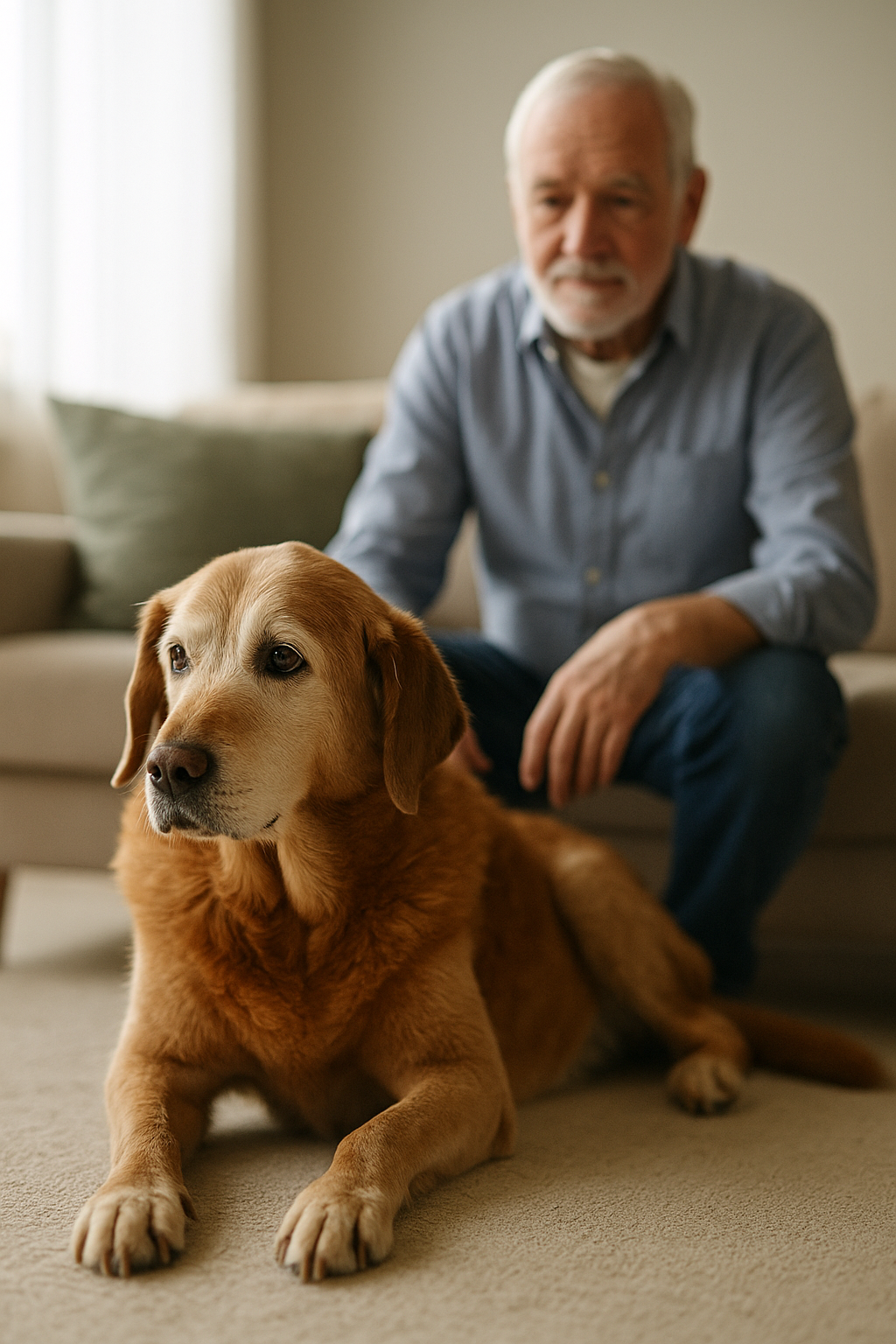
What Changes Are Normal — and What Deserve Attention
From Aussie
“I didn’t wake up old one morning.”
It happened slowly.
A little stiffness here.
A longer nap there.
Some days I move just fine. Other days I take my time.
I’m still happy.
I’m still me.
I just feel different sometimes — and that’s okay.
From Jeff
One of the hardest parts of caring for an aging dog is not knowing what’s normal and what might need attention.
Most dogs don’t change overnight. Aging happens gradually, and many of the early signs are easy to miss — or easy to worry about too much.
This page is here to help you understand:
- What aging often looks like in dogs
- Which changes are usually normal
- Which ones deserve a closer look
- And how to stay calm and confident as things change
What “Aging” Really Means for Dogs
Aging doesn’t mean your dog is suffering.
It usually means their body needs more support and patience.
Just like us, dogs may:
- Move more slowly
- Tire more easily
- Feel stiff after resting
- Prefer comfort over activity
These changes often come and go at first.
From Aussie
“Some days are easier than others.”
I might walk farther one day and shorter the next.
I might get up quickly sometimes — and carefully other times.
That doesn’t mean something is wrong. It just means I listen to my body now.
Common Physical Changes You May Notice
These are very common signs of early aging:
- Slower rising from beds or floors
- Stiffness after naps
- Hesitation before stairs or jumping
- Shorter walks
- Occasional slipping on smooth floors
- Sleeping more than before
Many dogs experience these changes without being in pain.
Behavioral Changes That Can Be Normal
Aging doesn’t only affect the body.
You may notice your dog:
- Sleeps more deeply
- Is more attached to familiar routines
- Becomes more cautious
- Startles more easily
- Seeks comfort or closeness
These are often signs of adjustment, not distress.
From Aussie
“I like knowing where things are.”
I feel better when my routines stay the same.
I feel calmer when I don’t have to rush.
I still enjoy company — just in quieter ways.
Emotional Changes (For Dogs and Owners)
This part matters more than people realize.
As dogs age:
- They may become more sensitive
- They may need reassurance
- They may sense your worry
And as owners:
- You may feel guilt
- You may worry you’re missing something
- You may fear what the future holds
Those feelings are completely normal.
What Usually Deserves Attention
While many changes are normal, it’s wise to check in with your veterinarian if you notice:
- Sudden or severe limping
- Crying or yelping in pain
- Refusal to eat or drink
- Rapid personality changes
- Trouble standing at all
- Significant weight loss
Trust your instincts — asking questions early is always okay.
From Aussie
“I rely on you to notice.”
I can’t explain how I feel with words.
But when you pay attention — when you help gently — I feel safe.
Aging Does Not Mean the End of Joy
Many senior dogs:
- Still enjoy walks (just shorter ones)
- Still enjoy play (just slower)
- Still enjoy companionship
- Still enjoy life
Aging is not something to fear.
It’s something to adapt to with care.
What Comes Next
Understanding aging is the first step.
The next step is learning how to support comfort and mobility in everyday life.
You may want to explore:
- Simple Ways to Make Your Home Safer for an Older Dog
- Helping Your Dog Move Comfortably Without Pressure
Take your time. There’s no rush here.
From Aussie
“Thank you for walking at my pace.”
I’m still here.
I still love you.
And I’m grateful you’re paying attention.
A Gentle Reminder
Dawg Solutions provides educational information only and does not replace veterinary care. If something feels concerning, your veterinarian is always the best next step.
Love,
Aussie & Jeff