Separation anxiety symptoms in senior dogs can be a mystery to many dog owners. When my mother was in the hospital I was taking care of her older dog, and she would not eat or do her normal everyday routine.
Affiliate Disclosure
You will never find any affiliate links in any of my step-by-step guides on any of my websites, I feel that my guides are to educate you, not push products & services at you.
Separation Anxiety Symptoms in Senior Dogs
What’s Normal, What’s Not, and How to Help Your Aging Dog Feel Safe Again
If your older dog has started pacing when you grab your keys, whining when you leave the room, or acting unusually clingy, you’re not imagining things.
Separation anxiety can show up later in life, and for senior dogs, it often hits harder—and looks different—than it does in younger pups.
At Dawg Solutions, we hear from a lot of concerned dog parents asking:
“Why is my senior dog suddenly anxious when I leave?”
“Is this just old age… or something else?”
Let’s walk through it together—slowly, calmly, and with your dog’s comfort first.
What Is Separation Anxiety in Senior Dogs?
Separation anxiety happens when a dog becomes distressed when they’re away from their favorite person. In older dogs, it’s often triggered by change, physical discomfort, or cognitive aging.
Unlike puppies who may chew shoes or bark nonstop, senior dogs often show quieter—but more emotional—signs.
And yes… it can come on suddenly, even if your dog was always independent before.
Common Separation Anxiety Symptoms in Senior Dogs
Here are the most common signs we see in older dogs:
1. Following You Everywhere
Your dog won’t let you out of their sight—not even to the bathroom.
This isn’t “being needy.”
It’s often fear of being alone.
2. Whining, Crying, or Barking When You Leave
Senior dogs may vocalize more softly—but persistently—after you leave.
Some will start before you even go, once they sense the routine.
3. Pacing or Restlessness
Your dog may:
- Walk back and forth
- Circle the room
- Struggle to settle down
This is anxiety, not excess energy.
4. House Soiling (Even If They’re House-Trained)
This one worries owners the most.
Stress can cause accidents—even in dogs who haven’t had one in years. It’s not spite, and it’s not “forgetting on purpose.”
5. Destructive Behavior (Out of Character)
Senior dogs don’t usually chew furniture—but anxiety can change that.
You may see:
- Scratching at doors
- Chewing bedding
- Pawing at crates or gates
6. Loss of Appetite When Alone
Some older dogs won’t eat unless you’re nearby.
They may skip meals, treats, or water until you return.
7. Physical Stress Signals
Watch for:
- Trembling
- Heavy panting
- Drooling
- Wide, worried eyes
These are silent cries for reassurance.
Why Separation Anxiety Appears in Older Dogs
This is where senior dogs are different.
Common causes include:
- Arthritis or chronic pain
- Vision or hearing loss
- Cognitive Decline (Canine Dementia)
- Loss of a companion (human or pet)
- Changes in routine
- More time alone after retirement changes
Pain and confusion make dogs feel vulnerable.
You leaving—even briefly—can feel overwhelming.
Aussie’s Corner

“I’m Not Being Difficult—I’m Just Scared”
“I used to nap when you left. Now my joints ache, my hearing isn’t what it was, and the house feels too quiet. When you go, I don’t know when you’re coming back… so I worry.”
— Aussie, Senior Dog & Dawg Solutions Mascot
Sometimes anxiety is just a dog asking,
“Please don’t forget me.”
What You Can Do to Help Your Senior Dog
1. Rule Out Medical Issues First
Always start with a vet visit.
Pain, arthritis, or cognitive decline can fuel anxiety. Treating discomfort often reduces emotional stress.
2. Create a Safe “Comfort Zone”
Set up one calm area with:
- Orthopedic bed
- Familiar blankets
- Soft lighting
- White noise or calming music
Consistency = security.
3. Practice Short Departures
Leave for:
- 1 minute
- Then 3
- Then 5
Return calmly—no big entrances or exits.
You’re teaching your dog:
“I always come back.”
4. Stick to Predictable Routines
Senior dogs thrive on routine:
- Same walk times
- Same meals
- Same bedtime rituals
Predictability lowers anxiety.
5. Use Calming Tools (With Vet Approval)
Helpful options may include:
- Calming chews
- Pheromone diffusers
- Anxiety wraps
- Joint-friendly exercise
Avoid anything sedating without professional guidance.
6. Increase Gentle Interaction
Extra cuddles matter.
So does:
- Short, slow walks
- Massage
- Talking to them before you leave
Your presence is their anchor.
When to Seek Professional Help
If your senior dog:
- Is hurting themselves
- Refuses to eat
- Panics intensely
- Declines rapidly
It’s time to talk to:
- Your vet
- A canine behaviorist
- A senior-dog-experienced trainer
Early help makes a big difference.
Reassurance for Worried Dog Parents
If you’re feeling overwhelmed, please hear this:
You didn’t cause this.
You’re not failing your dog.
Your concern already makes you a great dog parent.
Senior dogs love deeply—and they feel change deeply too.
With patience, comfort, and a little adjustment, many older dogs learn to feel safe again.
Key Takeaways for Dog Owners
- Separation anxiety can start in senior dogs
- Symptoms are often emotional and subtle
- Pain, aging, and routine changes are common triggers
- Calm structure and comfort help more than punishment
- Your presence and patience matter most
When I was caring for my mothers older dog when she was in the hospital, I was actually worried something was seriously wrong with her dog. I called her vet to find out if I needed to bring her in, but to my surprise the vet told me the dog was experiencing separation anxiety.
A Calm-Down Routine for Older Dogs
Helping Your Senior Dog Feel Safe, Relaxed, and Secure
Older dogs don’t need more stimulation—they need reassurance.
A calm-down routine gives your senior dog a predictable pattern that says:
“You’re safe. You’re comfortable. Nothing bad is about to happen.”
This routine works especially well for dogs dealing with:
- Separation anxiety
- Arthritis or chronic pain
- Vision or hearing loss
- Cognitive changes
- Increased clinginess
Let’s walk through it step by step.
Step-by-Step Calm-Down Routine for Senior Dogs
Step 1: Set the Scene (5–10 Minutes Before You Leave)
Start slowing things down before anxiety kicks in.
- Dim bright lights
- Close noisy windows
- Turn on soft music or white noise
- Speak in a calm, steady voice
Avoid rushing—your dog feels your energy.
Step 2: Gentle Physical Comfort
Before separation, give your dog intentional comfort.
- Light massage on shoulders or hips (great for arthritis)
- Slow brushing if they enjoy it
- Calm petting along the chest or sides
This releases tension and builds security.
Step 3: A Predictable “Anchor” Spot
Bring your dog to the same comfort area every time:
- Orthopedic bed
- Favorite blanket
- Familiar scent (your worn T-shirt works wonders)
Consistency matters more than location.
Step 4: Calm Verbal Reassurance
Say the same short phrase every time, such as:
- “You’re okay. I’ll be back.”
- “Rest time. I love you.”
Use the same tone—soft and confident.
This becomes emotional muscle memory.
Step 5: Offer a Low-Effort Comfort Item
Choose something calming, not exciting:
- A frozen lick mat
- A soft chew approved by your vet
- A calming treat or supplement (if recommended)
Avoid high-energy toys or puzzles.
Step 6: Quiet Exit
This part is hard—but important.
- No long goodbyes
- No apologizing
- No sneaking out either
Just leave calmly, like it’s no big deal.
Step 7: Calm Return Ritual
When you return:
- Greet calmly
- Avoid excited voices
- Wait until your dog settles before affection
This teaches them that leaving and returning are normal events.
Aussie’s Corner
“I Like Knowing What Comes Next”
“When you follow the same routine, I relax faster. My joints don’t ache as much, my heart slows down, and I know where I belong. I don’t need excitement—I need reassurance.”
— Aussie
How Often Should You Use This Routine?
✔ Every time you leave
✔ Before bedtime
✔ During storms or stressful days
✔ When routines change
Repetition builds trust.
Signs the Routine Is Working
Over time, you may notice:
- Less pacing
- Quicker settling
- Fewer accidents
- Improved sleep
- Less clinginess
Progress is gradual—celebrate small wins.
What Not to Do With Anxious Senior Dogs
- Punish anxious behavior
- Force crate use if they fear confinement
- Ignore signs of pain or discomfort
- Make departures emotional or chaotic
Calm always beats control.
Reassurance for Dog Parents
- If your older dog seems more anxious than they used to be, it doesn’t mean they’re “going downhill.”
- It means they trust you enough to show vulnerability.
- A calm-down routine doesn’t just ease anxiety—it strengthens your bond during the years that matter most.
Anxiety-Trigger Tracker for Senior Dogs
Help Identify What’s Stressing Your Older Dog
Senior dogs often can’t tell us what’s wrong—but their behavior does.
An anxiety-trigger tracker helps you:
- Spot patterns
- Reduce preventable stress
- Share clear information with your vet
- Adjust routines with confidence
You don’t need perfection—just consistency.
How to Use This Tracker
Observe, don’t judge
Track for 7–14 days
Write things down as soon as possible
Look for patterns, not one-off moments
Even small details matter.
Senior Dog Anxiety-Trigger Tracking Chart
Date & Time
- Morning / Afternoon / Evening / Night
What Was Happening Right Before the Anxiety?
(Check all that apply)
- ⬜ Owner leaving the house
- ⬜ Owner changing rooms
- ⬜ Loud noises (TV, storm, construction)
- ⬜ Visitors or unfamiliar people
- ⬜ Mealtime changes
- ⬜ Walk delayed or skipped
- ⬜ New environment
- ⬜ Left alone longer than usual
- ⬜ Other pets nearby
- ⬜ Unknown / Not sure
What Symptoms Did You Notice?
(Check all that apply)
- ⬜ Pacing
- ⬜ Whining or barking
- ⬜ Trembling
- ⬜ Panting
- ⬜ Clinginess
- ⬜ Hiding
- ⬜ Destructive behavior
- ⬜ Loss of appetite
- ⬜ Accidents
- ⬜ Restlessness
- ⬜ Other: ____________________
How Intense Was the Anxiety?
(Circle one)
Mild – Settled quickly
Moderate – Took time to calm
Severe – Hard to soothe
How Long Did It Last?
- ⬜ Less than 5 minutes
- ⬜ 5–15 minutes
- ⬜ 15–30 minutes
- ⬜ Longer than 30 minutes
What Helped Calm Your Dog?
(Check all that apply)
- ⬜ Calm-down routine
- ⬜ Owner returned
- ⬜ Physical comfort
- ⬜ Music or white noise
- ⬜ Treat or chew
- ⬜ Exercise earlier helped
- ⬜ Nothing seemed to help
- ⬜ Other: ____________________
Notes (Optional but Helpful)
- Changes in appetite?
- Mobility issues that day?
- Weather changes?
- New supplements or food?
How to Use the Results
After a week or two, look for:
- Repeating triggers
- Time-of-day patterns
- Links between pain days and anxiety
- What helps most consistently
This helps you:
Adjust routines
Prepare ahead of time
Reduce unnecessary stress
Have clearer conversations with your vet
Aussie’s Corner
“Some Days Hurt More Than Others”
“On days my joints ache more, I worry more. When you notice that and help me early, I don’t spiral.”
— Aussie
Pain and anxiety often travel together.
When to Share This Tracker With Your Vet
Bring it if:
- Anxiety is worsening
- Accidents increase
- Appetite drops
- Sleep patterns change
- Confusion seems worse
Clear notes = better care.
Reassurance for Dog Owners
- Tracking anxiety doesn’t mean you’re failing—it means you’re paying attention.
- Your senior dog isn’t being difficult.
They’re communicating the only way they know how.
This tracker helps you listen.
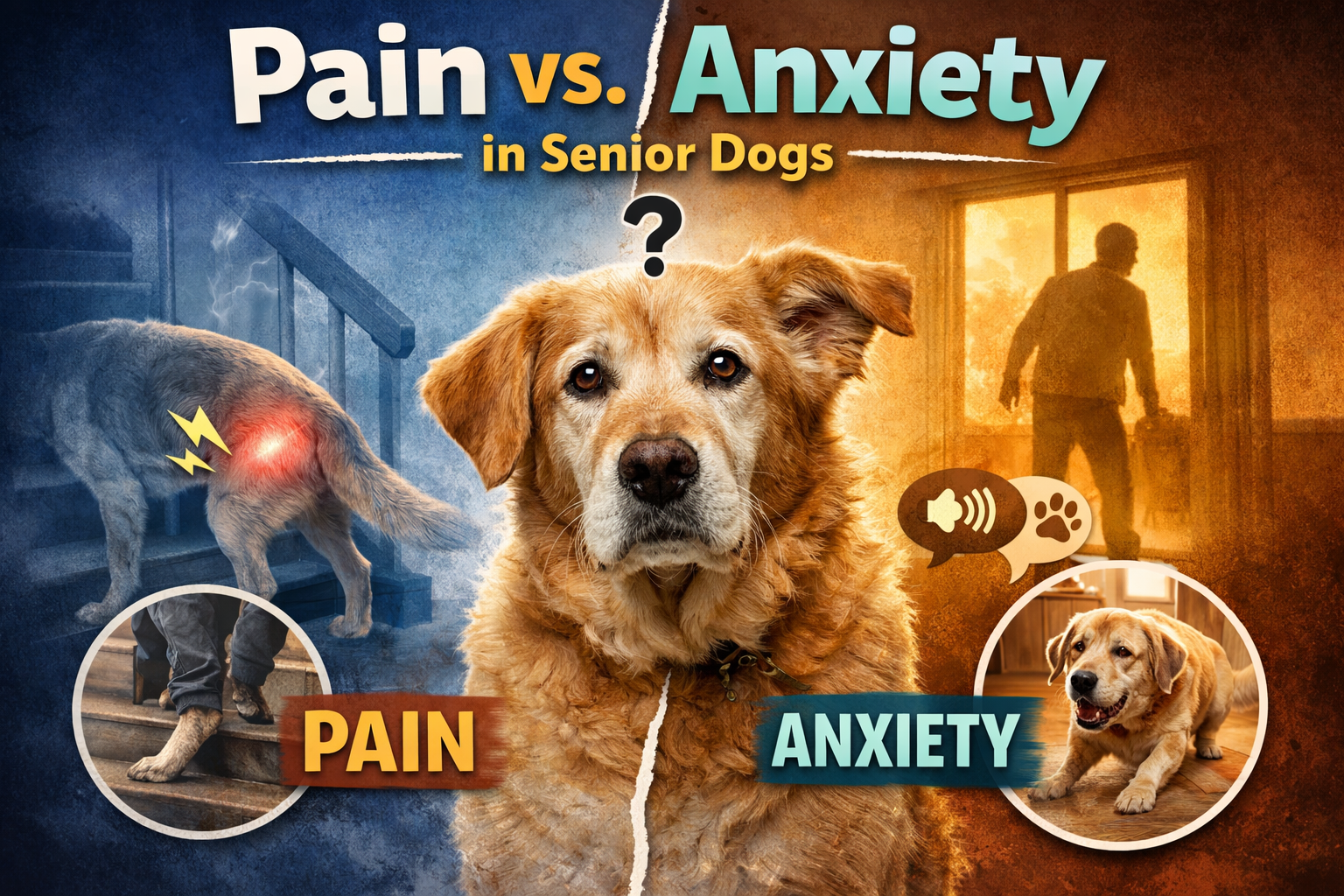
Pain vs. Anxiety in Senior Dogs
How to Tell What Your Older Dog Is Really Experiencing
- In senior dogs, pain and anxiety often overlap—and one can easily trigger the other.
- That’s why it’s important to recognize key differences, even though they sometimes look similar on the surface.
Use this comparison as a guide, not a diagnosis.
Senior Dog Pain vs. Anxiety Comparison
Pain-Related Signs
More likely pain if your dog shows:
- Limping or stiffness (especially after resting)
- Difficulty standing, sitting, or lying down
- Slower movement or reluctance to walk
- Sensitivity when touched in certain areas
- Panting without obvious stress triggers
- Changes in posture or gait
- Avoiding stairs, jumping, or certain surfaces
- Increased anxiety on high-pain days
Pain often worsens with movement and improves with rest or treatment.
Anxiety-Related Signs
More likely anxiety if your dog shows:
- Pacing or restlessness without physical strain
- Following you constantly
- Whining, barking, or crying
- Trembling or shaking
- Excessive licking or yawning
- House soiling tied to departures
- Symptoms appearing before or after you leave
Anxiety often worsens with separation or change and improves with reassurance.
When Pain and Anxiety Overlap
Many senior dogs experience both at the same time.
Pain can cause anxiety because:
- Movement feels unpredictable
- Dogs feel vulnerable
- They fear being alone while hurting
Anxiety can worsen pain because:
- Stress tightens muscles
- Restlessness increases joint strain
- Sleep disruption slows healing
That’s why treating one often helps the other.
Aussies Corner
“Some Days I Hurt… Some Days I Worry”
“When my hips ache, I worry you’ll leave me alone with the pain. When you help me early, I relax faster.”
— Aussie
What to Do If You’re Unsure
If you can’t tell which it is:
- Track symptoms with the Anxiety-Trigger Tracker
- Note pain-related behaviors (mobility, stiffness)
- Share patterns with your vet
Never assume it’s “just old age.”
Important Reminder for Dog Owners
- Pain is not a normal part of aging—and anxiety is not bad behavior.
- Both are signals that your senior dog needs support.
- When you listen closely, your dog tells you everything.
The American Kennel Club is my favorite resource for when I have questions about Aussie, then if that does not help I always consult with Aussie’s vet.
Thank you for reading ” Separation Anxiety Symptoms in Senior Dogs”,
Jeff/ Dawg Solutions
- Top Nutritional Needs Of Picky Small Dog BreedsTop nutritional needs of picky small dog breeds was inspired by my mothers yorkie terrier, she thinks she is too good to eat dog food. No matter if its kibbles or canned, she will go hungry before giving in. My mother worries that she is not getting the nutritional needs that she needs, so that … Read more
- Why Is Socialization Important For Special Needs DogsWhy is socialization important for special needs dogs might surprise you. Are you a dog owners with a dog with special needs, maybe you have it in your heart to adopt a special needs dog. Socialization is an important part of caring for this special dog, read why in my article written especially for you. … Read more
- What Is The Best Diet For Special Needs DogsWhat is the best diet for special needs dogs. Did you ever wonder if your special needs dog should be on a special diet plan. That is what we are going to cover in this article, so if this is something that interests you this article is for you. Affiliate Disclosure Amazon + Friends Affiliate … Read more
- How To Train Special Needs Dogs EffectivelyHow to train special needs dogs effectively is to help dog owners. Special needs dogs of course need special products from time to time, and then training them how to use them can be a challenge. Affiliate Disclosure Amazon + Friends Affiliate Disclosure: Some of the links on this website may be affiliate links. This … Read more
- What Are The Best Smart Dog Products For Senior DogsWhat are the best smart dog products for senior dogs. Taking care of our older dogs is extremely important to dog owners, we want to make them as comfortable and happy as possible. Smart dog products are able to help us accomplish these goals, together we are going to learn about the better smart dog … Read more
This article really resonated with me. I’ve had my older dog for over ten years, and what you described: the pacing, clinginess, and anxiety when I’m about to leave, feels so familiar. These behaviors can seem to come out of nowhere, and when they do, it’s hard not to worry that something is wrong, rather than just stress.
I also appreciated the emphasis on creating a consistent routine and a comforting environment for senior dogs. It has reminded me that sometimes their behavior isn’t due to stubbornness, but rather fear or discomfort that we might not immediately recognize.
One thing I’m curious about: have you found that certain calming tools, like pheromone diffusers or anxiety wraps, actually make a noticeable difference in older dogs? Or is it primarily the routine and environment that are most effective?
Hello Celia
Thank you for sharing your own experience with your older dog. Since my dog is becoming older I am noticing separation anxiety more than before, he also wants massages and attention more than ever before. I am giving him more attention and massages which seems to calm him down.
Diffuser scents and anxiety wraps have not helped my dog all that much, what helps the most for him is giving him more attention when I am home. Making my apartment more comfortable for him, I also find heating mats in his bed works real well on cold nights in Pennsylvania in the winter months and cooling mats during the summer.
Every dog is a little different of course,
Jeff