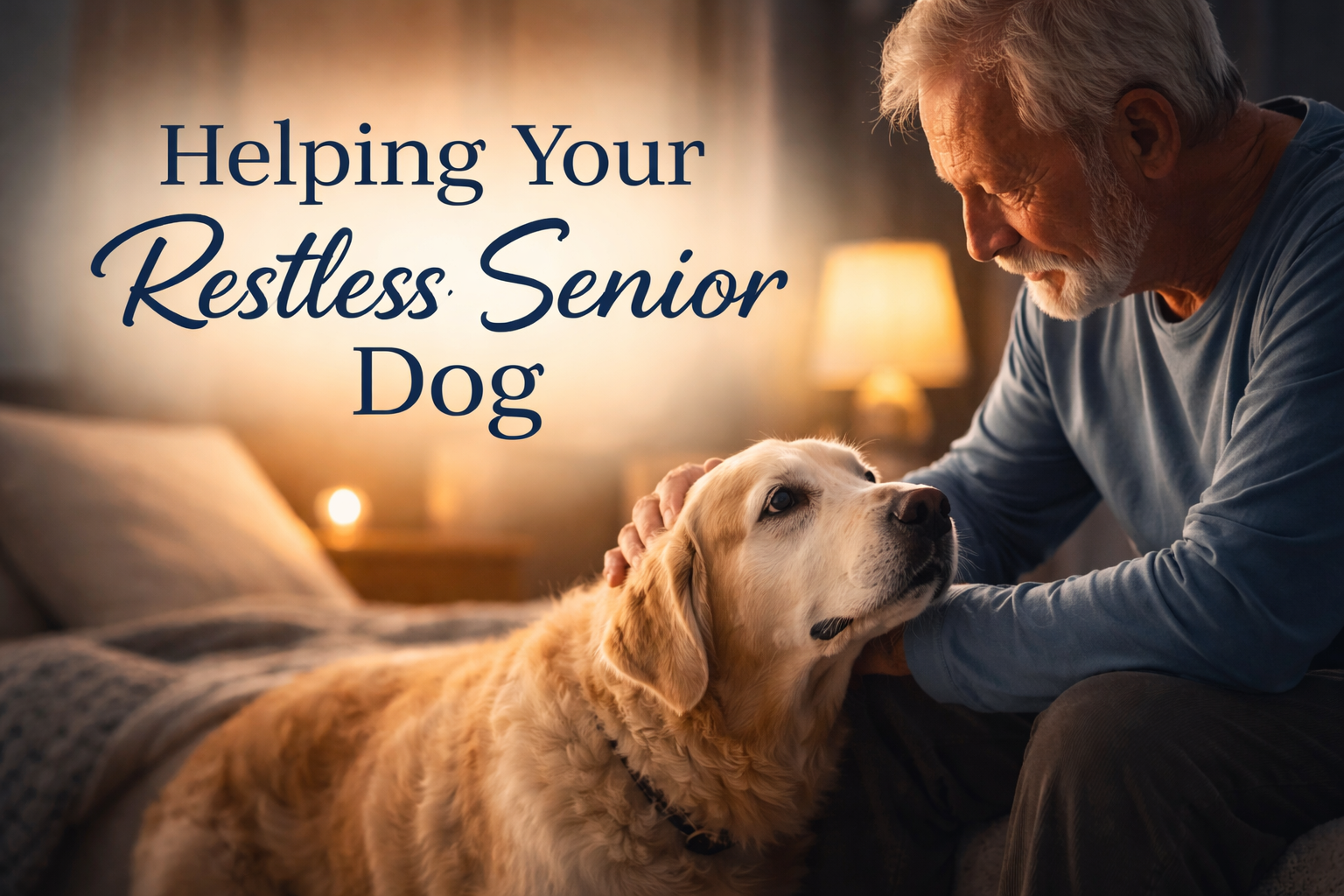
Why is my senior dog restless might sound familar to you, How I came up with this topic is Aussie has become restless lately I have noticed. To help Aussie and you I decided to share what i can find out, that is another reason I created Dawg Solutions.
Dawg Solutions Shares
Before we find the reasons senior dogs become restless and what we can do, I want to let you know Dawg Solutions is an educational resource for senior dog owners and older dogs. You will not find any affiliate links in my dawg solutions, now let us move on to solving the mystery why older dogs become restless.
Why Is My Senior Dog Restless?
Gentle Reasons & What You Can Do
- Many senior dogs become restless later in life
- It doesn’t automatically mean something is “wrong”
- Small changes in comfort, routine, or senses can cause it
“When a senior dog starts pacing, whining, or struggling to settle, it can tug at your heart. You know your dog, and you can feel something has changed.”
What Does Restlessness Look Like in Senior Dogs?
Recognize common signs:
- Pacing or wandering
- Getting up and down frequently
- Restless at night
- Whining or soft vocalizing
- Following you closely
- Difficulty settling even when tired
Jeffs Tip: These behaviors are common in aging dogs
Common Reasons Senior Dogs Become Restless

1. Physical Discomfort or Pain
Explain gently:
- Arthritis and joint stiffness
- Muscle soreness
- Difficulty finding a comfortable position
Simple signs:
- Hesitation to lie down
- Shifting positions often
- Restlessness increases at night or after activity
2. Cognitive Changes
Canine Cognitive Dysfunction
- Similar to aging-related confusion
- Dogs may feel disoriented or anxious
- Often worse in the evening usually after its dark outside
Signs include:
- Pacing without purpose
- Staring at walls
- Seeming lost in familiar rooms
3. Anxiety or Emotional Changes
Senior dogs may:
- Feel insecure as hearing or vision fades
- Become more attached to their person
- Feel unsettled when routines change
Jeffs Tip
“Your dog isn’t being needy — they’re seeking reassurance.”
4. Changes in Sleep Patterns
- Older dogs sleep lighter
- Wake more often
- May nap more during the day and pace at night
This is very common and often misunderstood.
5. Environmental Factors
Small things matter more now:
- Slippery floors
- Cold rooms
- Noisy appliances
- New furniture layouts
Senior dogs thrive on familiarity.
What You Can Do to Help a Restless Senior Dog
Simple Comfort Adjustments
- Orthopedic or memory-foam bed
- Night lights for dim areas
- Non-slip rugs
- Warm blankets (if they like them)
Gentle Routine & Reassurance
- Consistent feeding and walk times
- Calm bedtime routine
- Soft voice and slow movements
- Quiet companionship (just being near you helps)
Gentle Activity During the Day
- Short, slow walks
- Light play
- Mental stimulation (sniffing, simple puzzles)
This helps nighttime restlessness.
When to Talk to the Vet (Without Panic)
Schedle a vet visit if:
- Restlessness appears suddenly
- Pain seems severe
- Appetite changes
- Night pacing worsens rapidly
Another Tip From Jeff
“A check-in doesn’t mean bad news — often it means relief.”
Aussie’s Corner

Personal connection always lands well.
- How Aussie gets restless at night
- What helped him settle
- A small ritual you and Aussie share
- How listening to him changed how you respond
Keep it heartfelt and simple.
Consider This
“If your senior dog is restless, start with comfort, routine, and reassurance. Often, those three things make the biggest difference.”
What You Need To Know
- Aging is a season, not a failure
- Restlessness is communication
- Your presence matters more than perfection
Understanding Your Older Dog
Aussie has always been ready for bed shortly after it became dark ever since he was a pup, but just lately he has been not acting the same. This did have me worried, so that is why I decided to research his restless nights and share it with you.
Understanding Your Restless Senior Dog Is the First Step to Helping Them
When your older dog becomes restless, it’s easy to jump straight to worry. You may wonder if they’re in pain, confused, or trying to tell you something is wrong. Those thoughts are natural — especially when your dog has been your steady companion for years.
But before searching for answers or solutions, the most important first step is understanding what your dog may be experiencing.
Restlessness in senior dogs is rarely bad behavior. It’s communication.
Your Dog Isn’t Being Difficult — They’re Expressing a Need
As dogs age, they lose some of the tools they once relied on to feel secure. Vision may fade. Hearing may not be as sharp. Joints may ache in ways they don’t fully understand. What once felt familiar can suddenly feel uncomfortable or confusing.
When a senior dog paces, shifts positions, or struggles to settle, they’re not trying to get attention or disrupt your routine. They’re trying to cope.
Understanding this changes everything.
Instead of asking, “Why won’t my dog lie down?”
You begin asking, “What might make them feel more comfortable right now?”
That shift in perspective is powerful.
Restlessness Is Often a Quiet Request for Comfort or Reassurance
Many senior dogs don’t cry out when something feels off. They communicate subtly:
- Moving from spot to spot
- Standing and staring
- Following you closely
- Needing to be near you more often
These behaviors often mean your dog is seeking reassurance — not because you’ve done something wrong, but because your presence helps them feel safe.
By recognizing restlessness as a signal rather than a problem, you become better equipped to respond with calm support instead of anxiety.
Observation Builds Understanding — And Confidence
One of the most helpful things you can do for a restless senior dog is simply observe without panic.
Notice:
- When restlessness happens (night, after walks, during quiet hours)
- Where your dog settles most comfortably
- Whether certain sounds, lights, or surfaces seem to bother them
These small observations give you clues — and they help you advocate for your dog when adjustments or veterinary guidance are needed.
More importantly, they help you feel less helpless.
Understanding Leads to Gentler, More Effective Help
Once you understand that restlessness is part of aging — not failure — your response naturally becomes gentler:
- You adjust routines instead of forcing habits
- You offer comfort instead of correction
- You meet your dog where they are, not where they used to be
And that’s where real help begins.
Your dog may never move the same way again or sleep as deeply as they once did — but with understanding, they can still feel safe, loved, and supported every day.
Creating a Healthy Routine to Ease Your Senior Dog’s Restlessness

As dogs grow older, routine becomes more than habit — it becomes comfort.
When your senior dog feels restless, it’s often because their body or senses are changing faster than their environment. A healthy routine helps bridge that gap, giving your dog something predictable to lean on when everything else feels uncertain.
The goal isn’t to overhaul your life. It’s to soften and adjust your routine in ways that support your dog’s new needs.
Why Routine Matters More in the Senior Years
Older dogs rely on familiarity to feel safe. When vision dims, hearing fades, or joints stiffen, predictability reduces anxiety.
A steady routine:
- Helps regulate sleep cycles
- Reduces nighttime pacing
- Builds emotional security
- Signals to your dog, “You’re okay. Nothing unexpected is happening.”
Even small inconsistencies can feel bigger to a senior dog than they did before.
Adjusting Your Daily Schedule — Without Stress
You don’t need a rigid timetable. You need consistency with flexibility.
Focus on:
- Feeding at roughly the same times each day
- Gentle walks at predictable intervals
- Calm transitions between activity and rest
If your dog tires more quickly, shorten walks rather than skipping them. If they wake earlier, consider shifting bedtime routines slightly instead of fighting it.
Think of routine as rhythm, not rules.
Daytime Activity Supports Nighttime Rest
Restlessness at night often begins during the day.
Helpful daytime habits include:
- Short, slow walks that allow sniffing
- Light mental stimulation (simple games, gentle training cues)
- Quiet companionship rather than constant stimulation
Too little activity can lead to pacing later. Too much can cause soreness. The sweet spot is gentle movement paired with rest.
A Calming Evening Routine Makes a Big Difference
Evenings are when many senior dogs struggle most.
Create a wind-down ritual:
- Dim lights gradually
- Lower household noise
- Offer a comfortable resting spot
- Sit with your dog for a few calm minutes before bedtime
Doing the same steps each night teaches your dog that rest is coming — and that they don’t need to stay alert.
Be Willing to Change Your Routine Too
One of the hardest — and most loving — parts of caring for a senior dog is recognizing that their needs now guide the household rhythm.
That might mean:
- A later evening potty break
- A slower morning start
- More quiet time together
- Staying nearby when your dog settles
These adjustments aren’t setbacks. They’re acts of compassion.
Routine Builds Trust When Words No Longer Work
Your dog may not understand why their body feels different — but they understand consistency, kindness, and your presence.
By shaping a healthy routine around your senior dog’s comfort, you give them something powerful:
- Predictability in an unpredictable season
- Reassurance without words
- A sense of peace when rest feels hard
And often, that’s exactly what they’ve been asking for.
Aussie’s Corner
How a Gentle Routine Helped Me Feel Safe Again
Hi friends,
Aussie here.
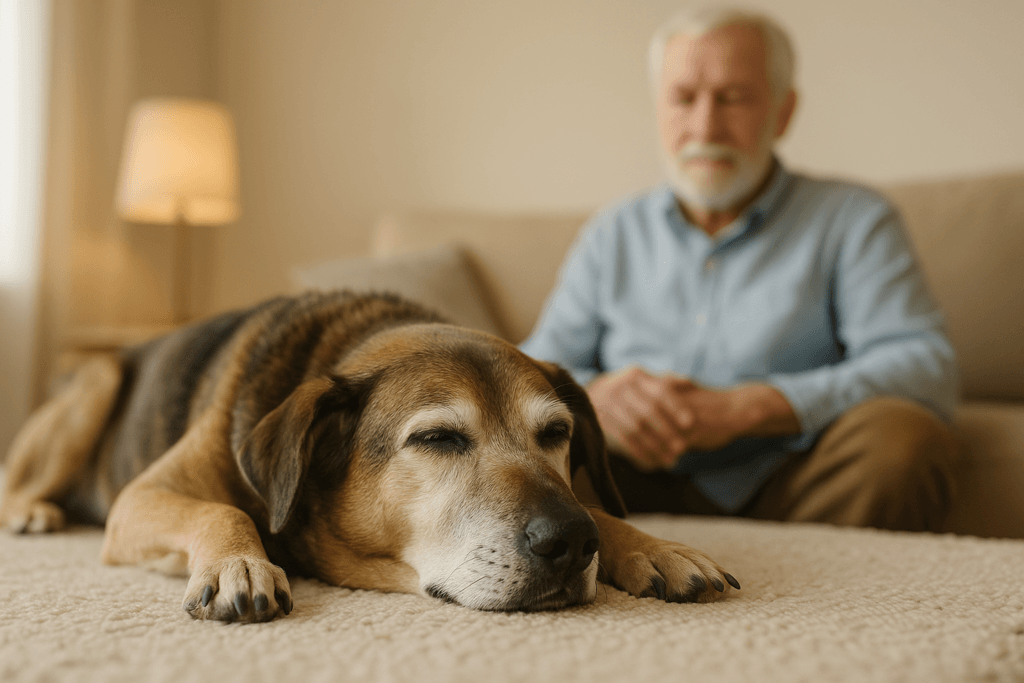
I’m a little slower than I used to be. My legs don’t bend the same way, and sometimes my mind feels busy when I really just want to rest. At night especially, I used to get up a lot. I’d walk from room to room, stand and stare, and wonder if something was wrong — even when nothing was.
I wasn’t trying to be difficult.
I just didn’t know where I felt best anymore.
Jeff noticed.
Instead of telling me to lie down or getting frustrated, he started changing things around me instead of changing me.
The Routine That Made a Difference
Now, our evenings are quiet and predictable.
We take a slow walk before the sun goes down — not far, just enough for me to stretch my legs and sniff the air. When we come back inside, the lights get softer and the house gets calmer. No rushing. No loud noises.
Jeff sits with me for a few minutes every night. Sometimes we don’t do anything at all. He just rests a hand on my back so I know he’s there.
My bed is always in the same place. My blanket smells like home. When I shift around, nobody tells me to hurry up or settle down. I’m allowed to take my time.
Why It Helped Me
That routine told me something important:
Nothing bad is about to happen.
I’m safe.
I don’t have to stay alert.
I still get up sometimes. I still have restless moments. But now, when I feel unsure, I know what comes next — and that helps my body relax.
What I Want You to Know
If your older dog seems restless, please remember this:
We aren’t broken.
We’re adjusting.
When you give us a routine that fits who we are now, it helps us rest without fear. Your patience, your consistency, and your quiet presence mean more than you know.
Sometimes the best medicine isn’t in a bottle.
It’s in the way you walk beside us as we slow down.
Love,
Aussie
Read Jeffs Relax & Secure Tips
Pet-Friendly Hobbies That Help Calm Restless Senior Dogs
As dogs grow older, restlessness doesn’t always mean something is wrong. Sometimes it means they still want connection, purpose, and gentle engagement — just in a quieter way than before.
Shared hobbies give senior dogs something grounding to look forward to. They also help owners slow down, notice small moments, and replace worry with togetherness.
These aren’t activities meant to tire your dog out. They’re meant to help them feel settled.
1. Slow Walks With No Destination
This isn’t exercise — it’s exploration.
Let your dog:
- Walk at their own pace
- Stop and sniff as long as they want
- Choose the direction sometimes
Sniffing is calming for dogs and mentally enriching. Even a short walk can reduce restless behaviors later in the day.
2. Window Watching (Together)
Many senior dogs enjoy watching the world quietly.
Try:
- A comfortable bed near a window
- Soft background noise
- Sitting nearby with a book or coffee
This provides stimulation without overstimulation — perfect for older dogs who still want to “keep an eye on things.”
3. Gentle Scent Games
Mental activity often settles restlessness more than physical exertion.
Simple ideas:
- Hide treats in easy-to-reach places
- Let your dog find them at their own pace
- Use familiar scents rather than new challenges
Five minutes of scent work can calm a restless mind.
4. Quiet Companionship Time
Sometimes the hobby is simply being together.
Examples:
- Sitting on the porch
- Light brushing or massage
- Talking softly to your dog
- Letting them rest near you while you work
Your presence is regulating. It tells your dog they don’t need to stay alert.
5. Calm Training or Routine Cues
Senior dogs often enjoy familiar cues — especially when there’s no pressure.
Try:
- Simple commands your dog already knows
- Praise without expectation
- Very short sessions (2–5 minutes)
This gives structure and boosts confidence without stress.
6. Joint-Friendly Indoor Activities
On bad weather days:
- Slow hallway walks
- Gentle stretching (if approved by your vet)
- Rolling a soft toy instead of throwing it
Low impact, high connection.
Why Shared Hobbies Reduce Restlessness
These activities:
- Provide predictability
- Build emotional security
- Reduce anxiety
- Encourage restful sleep
- Strengthen the bond between you and your dog
For many senior dogs, togetherness is the calming factor.
Reminder
Your older dog doesn’t need more stimulation — they need the right stimulation.
A quiet life, shared moments, and familiar routines often do more to ease restlessness than anything else.
Since Dawg Solutions is for senior dog owners, here are some pet-friendly hobbies seniors can do with their older dogs.
Pet-Friendly Hobbies For Older Adults & Their Senior Dogs
Veterinary-Approved Health & Behavior Resources
These links provide trustworthy, educational guidance on senior dog restlessness, aging, and behavior:
AVMA – Caring for Senior Pets
A veterinary overview of aging pet care — including why seniors need more frequent check-ups and lifestyle adjustments. American Veterinary Medical Association
Veterinary Partner – Nighttime Waking in Senior Dogs
Explains why older dogs wake at night, possible medical causes, and helpful vet-guided solutions. veterinarypartner.vin.com
Purina – Understanding & Managing Old Dog Pacing
Trusted behavior article on why pacing and restlessness happen in older dogs and practical tips to make evenings calmer. Purina
Cornell Vet – Senior Dog Dementia & Enrichment
Great for readers who want to understand cognitive changes and how routines and enrichment help older dogs. Cornell Vet College
ToeGrips – Senior Dog Anxiety at Night
Veterinarian-written guidance for nighttime anxiety and how proper diagnosis and gentle care can improve rest. Dr. Buzby’s ToeGrips for Dogs
Behavior & Health Guidance Sites
These go a bit deeper into symptoms and when to seek professional help:
ASPCA – Behavior Problems in Older Dogs
Covers aging-related behavior changes (including restlessness) and emphasizes medical evaluation first. ASPCA
Dial A Vet – Restless Behavior in Older Dogs
Simple Q&A explaining common causes like cognitive dysfunction, arthritis, and changes in routine. Dial A Vet
Vetster – Restlessness & Agitation Overview
A broader overview of restlessness and agitation; helpful if readers want to understand when symptoms may be more serious. Vetster Online Vets
Research & Support Organizations
These aren’t behavior how-tos, but reputable groups readers can explore for deeper learning or community support:
Dog Aging Project — A long-term scientific study on canine aging; contributes to broader understanding of aging dogs. Wikipedia
From Jeff & Aussie
If your nights have been a little restless lately — yours or your dog’s — we hope this article has helped ease some of that worry.
Caring for an older dog brings a special kind of love, and with it, new questions you never had to ask before. Restlessness doesn’t mean you’re doing anything wrong. More often, it means your dog is changing — and you’re learning how to change with them.
Understanding is the Key
Understanding what your senior dog may be experiencing is the first step toward calmer nights. Small adjustments, gentle routines, shared moments, and quiet reassurance can make a bigger difference than you might realize.
Aussie Shares
Aussie wants you to know this:
Sometimes all an older dog really needs is to know they’re not alone.
Jeff Shares
And from me — Jeff — thank you for caring enough to look for answers. That tells us everything about the kind of person you are and the kind of home your dog has.
May tonight be a little calmer.
May tomorrow feel a little lighter.
And may the love you share continue to carry you both through this season together.
With warmth and understanding,
Jeff & Aussie
- Top Nutritional Needs Of Picky Small Dog BreedsTop nutritional needs of picky small dog breeds was inspired by my mothers yorkie terrier, she thinks she is too good to eat dog food. No matter if its kibbles or canned, she will go hungry before giving in. My mother worries that she is not getting the nutritional needs that she needs, so that … Read more
- Why Is Socialization Important For Special Needs DogsWhy is socialization important for special needs dogs might surprise you. Are you a dog owners with a dog with special needs, maybe you have it in your heart to adopt a special needs dog. Socialization is an important part of caring for this special dog, read why in my article written especially for you. … Read more
- What Is The Best Diet For Special Needs DogsWhat is the best diet for special needs dogs. Did you ever wonder if your special needs dog should be on a special diet plan. That is what we are going to cover in this article, so if this is something that interests you this article is for you. Affiliate Disclosure Amazon + Friends Affiliate … Read more
- How To Train Special Needs Dogs EffectivelyHow to train special needs dogs effectively is to help dog owners. Special needs dogs of course need special products from time to time, and then training them how to use them can be a challenge. Affiliate Disclosure Amazon + Friends Affiliate Disclosure: Some of the links on this website may be affiliate links. This … Read more
- What Are The Best Smart Dog Products For Senior DogsWhat are the best smart dog products for senior dogs. Taking care of our older dogs is extremely important to dog owners, we want to make them as comfortable and happy as possible. Smart dog products are able to help us accomplish these goals, together we are going to learn about the better smart dog … Read more
This post is incredibly compassionate and reassuring for anyone caring for a senior dog. I love how you frame restlessness not as a problem, but as communication, which completely changes how we respond as caregivers. Sharing Aussie’s story makes the topic feel real and relatable, and it’s comforting to know these changes are often part of normal aging, not immediate emergencies. The gentle explanations around pain, cognitive changes, sleep patterns, and routine really help reduce panic while still encouraging awareness. I also appreciate the practical, low-stress suggestions, small home adjustments, calm routines, and simple companionship can make such a big difference. Your reminder that older dogs are seeking reassurance, not being difficult, really resonates. Dawg Solutions truly feels like a safe, educational space for senior dog owners navigating this emotional stage with patience, understanding, and love.
Thank you Andrjs
Dawg Solutions is focusing on providing educational guides for older dog owners. Aussie is my inspirtation as he become older with mobility issues and other health concerns.
Jeff