Gentle dog breeds for older adults can make dog companionship very possible — even later in life. Many seniors quietly wonder if adopting a dog is still realistic at their age. Concerns about energy, mobility, daily care, or “keeping up” are completely normal — and they deserve honest, reassuring answers.
The Honest Facts
Here’s the truth: owning a dog doesn’t require constant activity or physical strength. It requires the right match. Many dogs are naturally calm, affectionate, and content with a slower pace of life. When a dog’s temperament fits your lifestyle, caring for them often feels less like work and more like shared routine.
Dawg Solutions Shares
At Dawg Solutions, we focus on gentle companionship, not high-energy expectations. A gentle dog can bring structure to the day, emotional comfort, and a quiet sense of purpose — without demanding long walks, intense training, or nonstop attention. In fact, many older adults find that a calm dog fits naturally into their daily rhythm.
Aussie would probably tell you this himself
“I don’t need you to run. I just need you to be here.”
That’s the heart of gentle companionship — presence, not pressure.
In this guide, we’ll explore gentle dog breeds that often do well with older adults, along with practical considerations to help you decide what feels manageable and realistic for you. Because being a good dog owner isn’t about age — it’s about choosing wisely, pacing yourself, and building a bond that works for both of you.
What Makes a Dog Gentle?
When we talk about a gentle dog, we’re not talking about perfection. We’re talking about dogs whose temperament and daily needs tend to fit well with a calmer, more predictable lifestyle — the kind many older adults already enjoy.
A gentle dog is often defined by how they behave, not just how they look.
Here are the most important traits that usually make a dog easier and more comfortable for older adults to care for:
- Calm temperament — not easily startled or overly reactive
- Lower to moderate energy — content with short walks and quiet time
- Affectionate but not demanding — enjoys closeness without constant attention
- Adaptable — comfortable with routine and slower changes
- Manageable size or strength — easier to handle safely
- Trainability — responds well to gentle guidance
- Comfort with indoor living — happy spending time at home
- Predictable behavior — especially important for safety and confidence
Aussie would probably add this one quietly:
“Gentle means we enjoy the same pace.”
Gentle Dog Breeds That Often Suit Older Adults
No dog breed is a guarantee — every dog is an individual. But the following breeds are widely known for calmer temperaments and companion-friendly personalities, making them worth considering for older adults.
1. Cavalier King Charles Spaniel
- Affectionate, calm, and deeply people-oriented
- Enjoys short walks and lots of quiet companionship
- Often happy as a lap dog or nearby presence
2. Bichon Frise
- Cheerful but not high-energy
- Friendly, gentle, and adaptable to apartment or home living
- Often does well with routine and consistency
3. Shih Tzu
- Bred specifically for companionship
- Content with indoor living and moderate activity
- Thrives on closeness rather than exercise
4. Pug
- Easygoing, affectionate, and people-focused
- Low exercise needs
- Known for wanting to be “where you are”
5. Greyhound
- A surprise to many — but often extremely gentle
- Calm indoors and content lounging most of the day
- Short bursts of activity, then long rest periods
6. Maltese
- Gentle, loyal, and devoted
- Enjoys a quiet household
- Light exercise needs when properly matched
7. Havanese
- Social, affectionate, and adaptable
- Known for gentle play and emotional sensitivity
- Often thrives in calmer homes
8. Older or Adult Rescue Dogs
- Temperament is already known
- Often calmer and house-trained
- Many are simply looking for peace, routine, and love
Aussie might say this part best:
“Older dogs already know how to slow down — and they’re very good at it.”
Gentle Dog Breeds Table Graphic
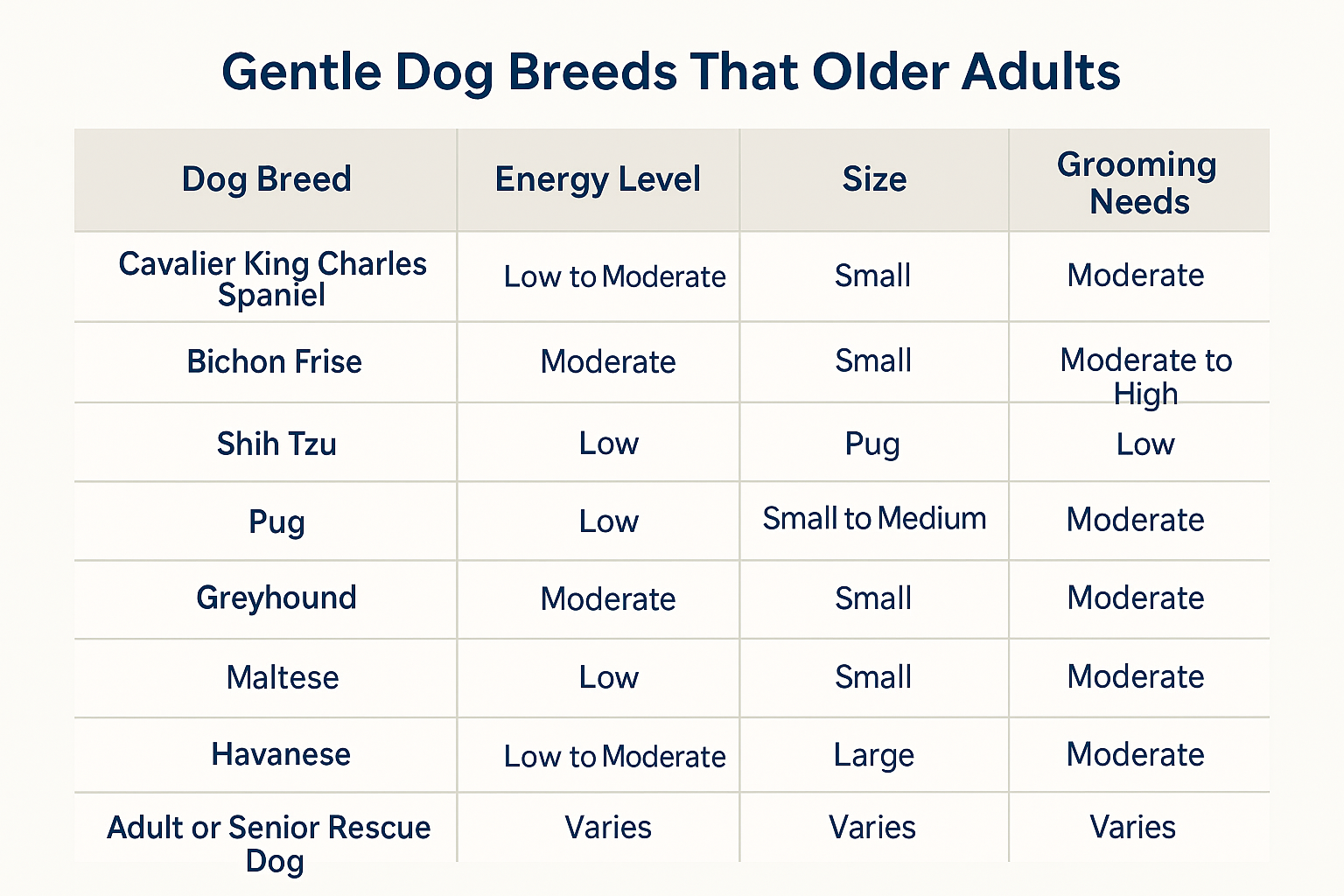
This table is meant to help you compare general tendencies, not make a final decision. Individual dogs may vary, and spending time with a dog before adopting is always the best way to know if the match feels right.
Aussie would quietly remind readers here:
“The calmest choice is the one that feels right to both of you.”
Why Adult & Senior Dogs Are Often the Best Choice for Older Adults
When people picture adopting a dog, they often imagine a puppy. But for many older adults, adult and senior dogs are actually a better, calmer, and more realistic match — especially when companionship, safety, and routine matter most.
Why Senior Dogs?
Adult and senior dogs usually come with something priceless: they already know how to live in the world. Their personalities are more predictable, their energy levels are clearer, and many are already house-trained. This removes much of the uncertainty that can make seniors hesitate about dog ownership.
At Dawg Solutions
At Dawg Solutions, we talk often about meeting dogs where they are — especially as they age. Just as older adults move at a different pace than they did years ago, many dogs do too. And that shared pace can create a beautiful, stress-free bond.
Why older dogs often fit senior lifestyles so well:
- Calmer energy levels — fewer sudden bursts, more relaxed companionship
- Known temperament — shelters and rescues can often describe behavior clearly
- Less training pressure — many already understand basic routines
- Shorter adjustment period — they settle into quiet homes more easily
- Emotionally intuitive — many older dogs are especially attuned to their people
Aussie would gently remind readers here:
“We don’t need excitement every day. We just need consistency.”
Keep Reading To Learn More
Many adult and senior dogs are overlooked simply because they’re not puppies — yet they often thrive in homes that value peace, routine, and gentle affection. For older adults who may already be managing mobility changes or quieter schedules, this kind of dog can feel like a natural extension of daily life.
Spending Time on Dawg Solutions
If you’ve spent time on Dawg Solutions’ Understanding Aging Dogs or Comfort & Mobility pages, you already know that aging doesn’t mean weakness — it means adjustment. The same is true for dogs. When expectations are realistic and care is thoughtful, older dogs can be deeply rewarding companions.
Consider This
And for those who worry, “What if something goes wrong?” — that’s a concern we take seriously. Our When to Talk to the Vet — Without Panic page exists for exactly that reason: to help seniors feel informed, prepared, and supported — not fearful.
Choosing an adult or senior dog isn’t about settling. It’s about choosing wisely, honoring your own needs, and offering a calm, loving home to a dog who is often more than ready to give the same in return.
Dawg Solutions is an educational website for older adults & senior dogs, you will not find any affiliate links in any of the articles provided by this website.
Aussie’s Corner

What Gentle Companionship Really Feels Like
If I could tell you one thing, it would be this —
gentle companionship isn’t about doing more. It’s about being present.
I don’t need long walks or busy days. I don’t need you to be fast or strong. What matters to me is knowing where you are, hearing your voice, and sharing the quiet moments in between.
Some days we sit together. Some days we take a short walk. Some days we just watch the world go by. And that’s enough.
Together We Enjoy LIfe
When life slows down, something else happens — we start noticing each other more. You learn my rhythms, and I learn yours. We settle into routines that feel safe and familiar. That’s what makes caring for each other easier, not harder.
I don’t judge how old you are. I don’t keep track of what you used to be able to do. I only know how it feels when you’re there — calm, steady, and kind.
Dawg Solutions Comment
At Dawg Solutions, you’ll see a lot about comfort, mobility, and aging with care. From where I sit, those things aren’t about limits. They’re about learning what still works — and honoring it.
So if you’re wondering whether you’re “still able” to care for a dog like me, here’s my answer:
Yes.
If you can offer patience, routine, and love — you already know how to be a good companion.
And I promise — we’re very good at meeting you halfway.
— Aussie
A Gentle Next Step
If this article has helped you feel a little more confident about the idea of dog companionship, you’re not alone. Many older adults begin right here — with questions, curiosity, and a quiet hope that it might still be possible.
If you’d like extra guidance, our Dawg Solutions – Start Here page was created just for that. It gently walks you through what to consider as both you and a dog age together, focusing on comfort, safety, and realistic care — without overwhelm.
How to Find a Gentle Dog That Fits Your Life
You don’t need to rush, and you don’t need to have everything figured out at once. Taking this one step at a time can make the process feel manageable and reassuring.
Step 1: Be Honest About Your Daily Pace
Before looking at dogs, take a moment to think about your routine:
- How much walking feels comfortable?
- Do you prefer quiet time or light activity?
- Would grooming help be available if needed?
There are no wrong answers — only helpful ones.
Step 2: Decide What “Gentle” Means to You
For some seniors, gentle means low energy.
For others, it means small size, predictable behavior, or emotional closeness.
Use the comparison table in this guide to identify which traits matter most to you.
Aussie would say:
“The best match is the one that feels calm in your hands and heart.”
Step 3: Consider Adult or Senior Dogs First
Adult and senior dogs often:
- Have known temperaments
- Require less training
- Adjust more easily to quiet homes
Many shelters and rescues are happy to help match you with a dog that fits your lifestyle — just be open about your needs.
Step 4: Use Trusted Adoption Resources
Start with organizations that focus on placement, not pressure:
- Local animal shelters & humane societies
- Breed-specific rescue groups (many specialize in gentle breeds)
- Senior-to-Senior adoption programs
- Foster-based rescues (dogs are already living in homes)
Ask questions. A good organization will welcome them.
Step 5: Spend Time Before You Decide
Whenever possible:
- Visit more than once
- Take short walks together
- Sit quietly and observe behavior
You’re not looking for excitement — you’re looking for comfort.
Step 6: Plan for Support
Even the most gentle dogs benefit from backup:
- A trusted friend or neighbor
- A local dog walker for occasional help
- A veterinarian you feel comfortable calling
If uncertainty around health care worries you, Dawg Solutions’ When to Talk to the Vet — Without Panic page can help you feel prepared without anxiety.
Step 7: Give Yourself Grace
You don’t have to be perfect to be a good dog owner.
Gentle companionship grows through:
- Routine
- Patience
- Showing up consistently
That’s something many older adults are already very good at.
A Final Reassurance
If you’re still unsure, that’s okay. The goal isn’t to convince you — it’s to support you in making a choice that feels right for you.
And if the time ever feels right to explore further, Dawg Solutions is here to walk alongside you — at your pace.
Aussie would wag and say:
“Slow is okay. Gentle is enough.”
What to Expect When You Bring Your Gentle Dog Home
Bringing a dog into your home — especially later in life — doesn’t have to feel overwhelming. In fact, with a gentle dog and realistic expectations, the transition is often quieter and simpler than many people imagine.
The first few days are not about doing everything perfectly. They’re about settling in together.
The First Few Days: Quiet Is Normal
Many gentle dogs, especially adult or senior dogs, may seem:
- Calm or reserved
- Extra sleepy
- Cautious in new spaces
This isn’t a problem — it’s adjustment. A calm home helps them feel safe faster.
Aussie would whisper:
“We’re just learning the new sounds and smells.”
Building a Simple Routine
Dogs feel comforted by predictability. Start small:
- Morning potty break
- Regular meal times
- Short, relaxed walks
- Quiet evenings
You don’t need a strict schedule — just consistency.
Activity Levels: Less Than You Might Expect
Gentle dog breeds don’t require constant exercise.
- Short walks are usually enough
- Indoor movement counts
- Rest is part of their wellness
Many older dogs are happiest simply being nearby.
Emotional Bonding Takes Time — and That’s Okay
Some dogs connect right away. Others take days or weeks.
- Let affection happen naturally
- Avoid overhandling or over-correcting
- Sit together. Talk softly. Be present.
Bonding grows quietly.
Small Challenges Are Normal
You might notice:
- Mild anxiety
- Confusion about routines
- Occasional accidents
These are common and usually temporary. Patience solves most early issues.
If something feels off, Dawg Solutions’ When to Talk to the Vet — Without Panic page can help you decide calmly when to ask for professional advice.
You’re Not Failing — You’re Adjusting
One of the biggest fears seniors share is “What if I can’t do this?”
The truth is:
- You don’t need to be perfect
- You don’t need endless energy
- You just need willingness and care
Aussie would reassure you here:
“We learn together.”
A Gentle Reminder
Your dog isn’t expecting a busy life. They’re looking for:
- Safety
- Routine
- Kindness
If you can offer those, you’re already giving them everything they need.
Common Worries & Gentle Answers
“What if I’m not strong enough to care for a dog?”
You don’t need strength — you need the right match. Gentle dogs are typically calm, manageable, and content with short walks and quiet time. Choosing a dog that fits your physical comfort level matters far more than age or strength.
Aussie would say:
“I don’t need you to lift me. I just need you to walk beside me.”
“What if I can’t walk very far?”
Many gentle dog breeds — especially adult and senior dogs — do just fine with:
- Short walks
- Indoor movement
- Backyard or patio time
Daily exercise doesn’t have to be long to be meaningful.
“What if I make a mistake?”
Every new relationship includes adjustment. Dogs don’t expect perfection. They respond to consistency, patience, and kindness. Small mistakes are part of learning together.
“What if my health changes?”
This is a valid concern, and planning helps:
- Choose a calm dog with lower care needs
- Build a small support network (family, neighbor, vet)
- Know when to ask for help
Dawg Solutions’ Comfort & Mobility and When to Talk to the Vet — Without Panic pages were created to support situations like this — calmly and realistically.
“What if the dog doesn’t bond with me right away?”
Some dogs need time to feel secure. Bonding may take days or weeks — especially for adult or rescue dogs. Quiet presence and routine often build trust faster than constant interaction.
Aussie would gently remind you:
“Trust grows when we feel safe.”
“What if I feel overwhelmed?”
Feeling overwhelmed doesn’t mean you made the wrong choice. It means you’re adjusting.
Slow down. Simplify routines. Focus on one day at a time. And remember — asking for help is part of being a responsible pet owner, not a failure.
“Am I too old to adopt a dog?”
No. Many dogs — especially adult and senior dogs — thrive in homes with older adults because they value calm, routine, and affection.
Age doesn’t limit your ability to love or care. It simply changes how you do it.
Aussie would wag and say:
“If you can love me, you’re ready.”
Before We Part Ways
Choosing to bring a dog into your life later in adulthood isn’t about proving anything — it’s about connection, comfort, and companionship. Gentle dog breeds, adult dogs, and senior dogs can fit beautifully into a quieter, more thoughtful lifestyle when the match is right and expectations are kind.
Take Your Time Deciding
If you’ve felt uncertain while reading this guide, that’s okay. Doubt often means you care deeply about doing the right thing. And caring — about your well-being and a dog’s — is exactly what makes a good companion.
Dawg Solutions Cares
At Dawg Solutions, we believe aging doesn’t close doors — it simply changes how we walk through them. With patience, realistic planning, and a gentle approach, dog companionship can still be not only possible, but deeply rewarding.
Aussie would leave you with this reminder:
“You don’t have to move fast. You just have to care.”
If you’d like to continue learning at your own pace, a trusted, senior-friendly resource we recommend is the Humane Society of the United States (HSUS). They offer clear, compassionate guidance on adopting dogs, including considerations for older adults, lifestyle matching, and responsible planning — without pressure or judgment.
And if you’re not ready today, that’s okay too. Dawg Solutions will be here whenever you are — walking beside you, one gentle step at a time.
Love,
In all seriousness, the most crucial points they made are about temperament and size. A dog that won’t accidentally pull you over on a walk, and one that doesn’t need to run a marathon every day, is key.
My final, genuinely warm thought? Adopting a senior dog from a shelter. They often come pre-trained, their energy levels perfectly match a relaxed lifestyle, and they simply melt into a comfy, loving routine. You give them their best final years, and they give you their unconditional best. It’s a win-win, really.
Thank you Leah
I thank you for reading and sharing your experience on Dawg Solutions. I like how you encourage other readers to consider adopting an older dog from a shelter, also that they are a very good match for older adults.
Come visit Dawg Solutions again
Jeff